Client Newsletter · August 2026
Steady Hands,
Faster Answers
What changed this month, and what it means for your workforce
Care Net Consultants · National Women's Month
In this edition
- Medical reports now in 48 hours, down from 72
- Three new mobile clinics, each with double hearing booth capacity
- Our fee position for 2026, and why we are holding it
- Women's Month, and what a gender sensitive assessment actually covers
- A Q4 readiness checklist you can work through in two minutes
The Sound in the Queue
Stand outside any clinic in this country at six in the morning and listen to what a South African queue actually sounds like. It is not complaining. It is laughing. Somebody has made a joke about the weather, or the traffic, or the price of everything, and the whole line has gone with it.
Visitors find this confusing. They expect a country that has absorbed as much as this one has to sound heavier. But the joke in the queue is not denial, and it is not bravado. It is load bearing. It is how a person carries something for a long time without being crushed by it, and it is one of the few genuinely universal truths about this place: we laugh first, and then we get on with it.
The last few years have asked a great deal of the organisations we work with. Costs that will not settle. Currency that will not sit still. Fuel, electricity, and compliance obligations all moving in the same unhelpful direction, month in and month out, for long enough that it has stopped feeling temporary.
And yet the operations we serve keep opening. The shifts keep starting. The workers keep arriving. That is not luck, and it is not sentiment. It is discipline, held quietly, by people who decided that the standard does not drop because the conditions did.
Resilience is not the absence of weight. It is what you build to carry it.
We are not a service provider. We are your partner in workplace health, and that word is chosen deliberately. A supplier delivers what was ordered. A partner tells you what you are about to need, and is still there in the month when it is difficult.
On Price, Value, and What You Are Actually Buying
Barteld Bakker, Founder and Managing Director
Dear Client,
There is one telephone call that every employer in this country dreads. It comes in the middle of an ordinary afternoon, and on the other end is a voice telling you that something has happened to somebody on your site.
Everything we do exists to make that call less likely, and to make sure that if it ever comes, you can account for every step you took to prevent it.
I want to talk to you plainly this month about something that puts both of those things at risk.
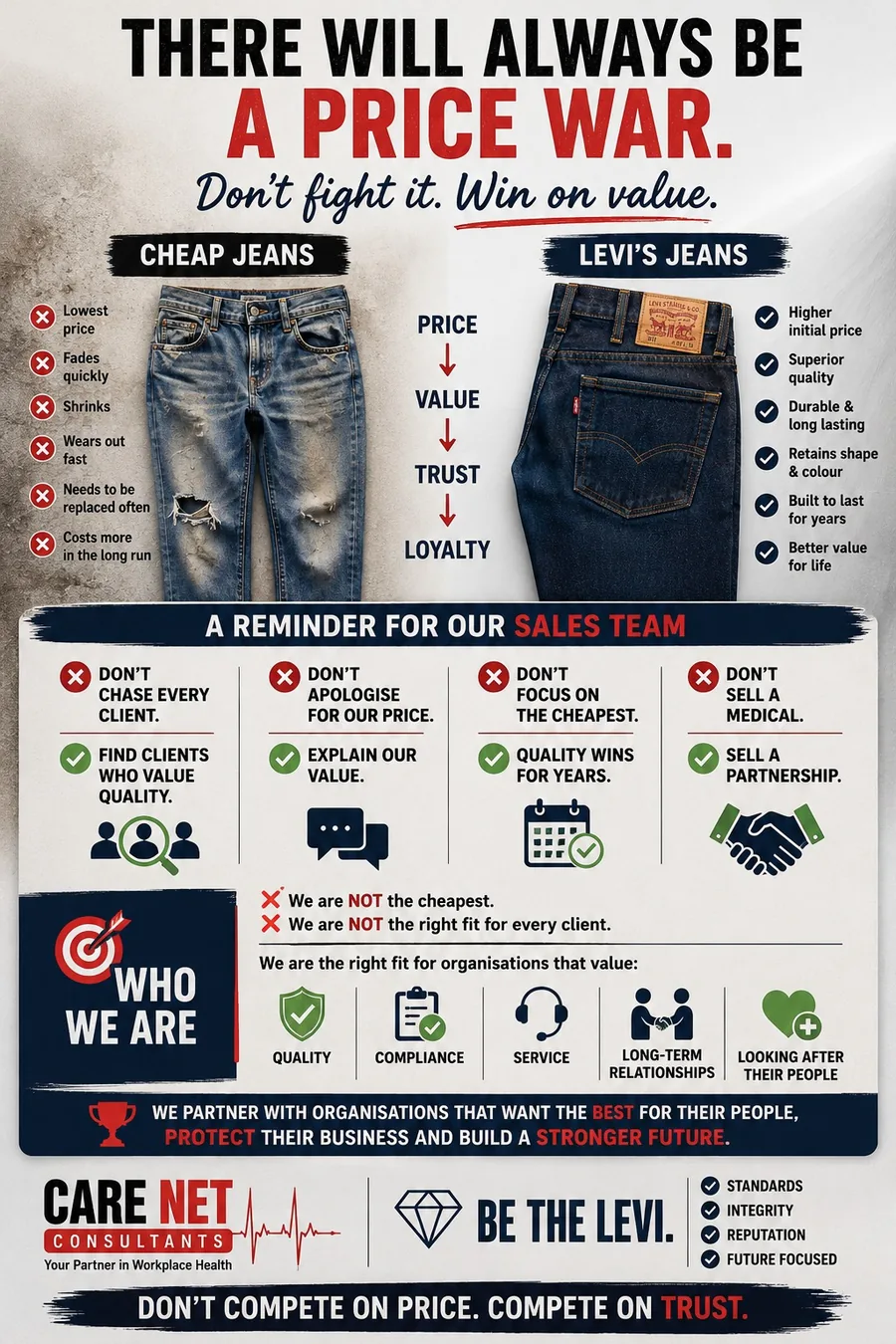
There is a price war in occupational health
You will have seen the quotes. Some of them are remarkable, and not in a good way. A number arrives far below everyone else, and it is tempting, because every organisation in this country is being squeezed and a saving is a saving.
But a medical assessment is not a commodity. It is a chain of small decisions about your people, and a low number always means something in that chain was removed. The question is what, and when you will find out.
Usually you find out late. An inspector asks for records that were never properly kept. A worker develops a hearing loss that a correctly performed assessment would have caught three years earlier. A claim lands, and the file that should defend you does not.
By then the saving is long spent. What is left is the exposure.
Four questions worth asking any provider
What consumables are being used on my people, and what quality are they?
Every assessment consumes something: the spirometer filter, the audiometry tips, the lancets, the cuffs. Quality varies enormously, and it is the easiest place for a low quote to find its margin. Ask to be told specifically what is used, and ask why.
Our answer. We buy the expensive consumables deliberately. The people coming through our clinics are your employees, and we would rather absorb that cost than explain a shortcut.
What tests are actually included, and has that quietly changed?
You know the block of cheese that used to be a kilogram and now sits somewhere between 700 and 800 grams for the same money. The pack looks the same. The price looks the same. Something was removed and nobody announced it.
Occupational health quotes can work the same way. A section disappears from the protocol, the invoice stays familiar, and nobody notices until an audit asks for something that was never done.
Our answer. Ours have gone the other way. We keep adding to what is included, and we keep giving more.
Where will our records live, and for how long?
Occupational health records are not ordinary business documents. Depending on the exposure involved, retention obligations can run for decades, and for certain hazardous agents up to forty years. If assessments are still captured on paper, ask plainly where those files will be in twenty years, and who will find them when an inspector asks.
How is worker information protected, and who is tracking the law?
Worker medical information is special personal information under the Protection of Personal Information Act. Consent has to be captured properly, storage has to be controlled, and the employer should receive fitness status rather than underlying clinical detail. The requirements also move. If nobody at your provider is tracking the changes, you will comply with last year's rules and find out during an audit.
What we have chosen to do instead
We could compete on price. We have decided not to.
We buy the expensive consumables on purpose. We keep records in a system built to outlast a filing room. We keep adding to what is included rather than quietly taking things out. Fourteen years in, that is the whole strategy, and it is not complicated.
What it means for you is simple. When somebody asks you to account for the health of your workforce, whether that is an inspector, a client of your own, a court, or a family, the answer is already there. Complete, retrievable, and defensible.
Our fees for 2026
We are holding them flat. Not as a promotion, and not for a limited period.
This is not a comfortable decision on our side. Fuel is up. Consumables are up. Conditions globally remain unsettled and difficult to forecast, and I will not pretend to know how the next twelve months unfold. What I can tell you is that we would rather absorb that pressure than pass it to you in a year when you are carrying enough of your own.
That is what the word partner is supposed to mean. It is easy to say when things are going well. It counts when they are not.
Thank you for choosing us. You have real alternatives, the market is competitive, and we do not treat your decision as settled. We intend to keep earning it every month, in the quality of the work rather than the size of the discount.
Warm regards,
Barteld Bakker
Founder and Managing Director
Our Busiest Quarter Starts Now
An honest operational note, because it is better said in August than discovered in October.
August through October is the busiest stretch of our year. Periodic assessments fall due, audit preparation begins, and organisations across every sector we serve arrive at the same conclusion in the same fortnight. Demand compresses, and preferred dates go first.
We would rather tell you this now than manage your disappointment later. If your workers are due for periodic assessments before the end of the year, please book early. Bookings placed with lead time run smoothly. Bookings placed in the last two weeks of a quarter are where the pressure shows, on your side and on ours.
Our four fixed clinics in Midrand, Elandsfontein, Brackenfell, and Gqeberha are all operating, and our mobile fleet has grown. The capacity is there. Planning is what turns capacity into a smooth day for your team.
What Has Changed on the Ground
Petrus van Zyl, Operations Director
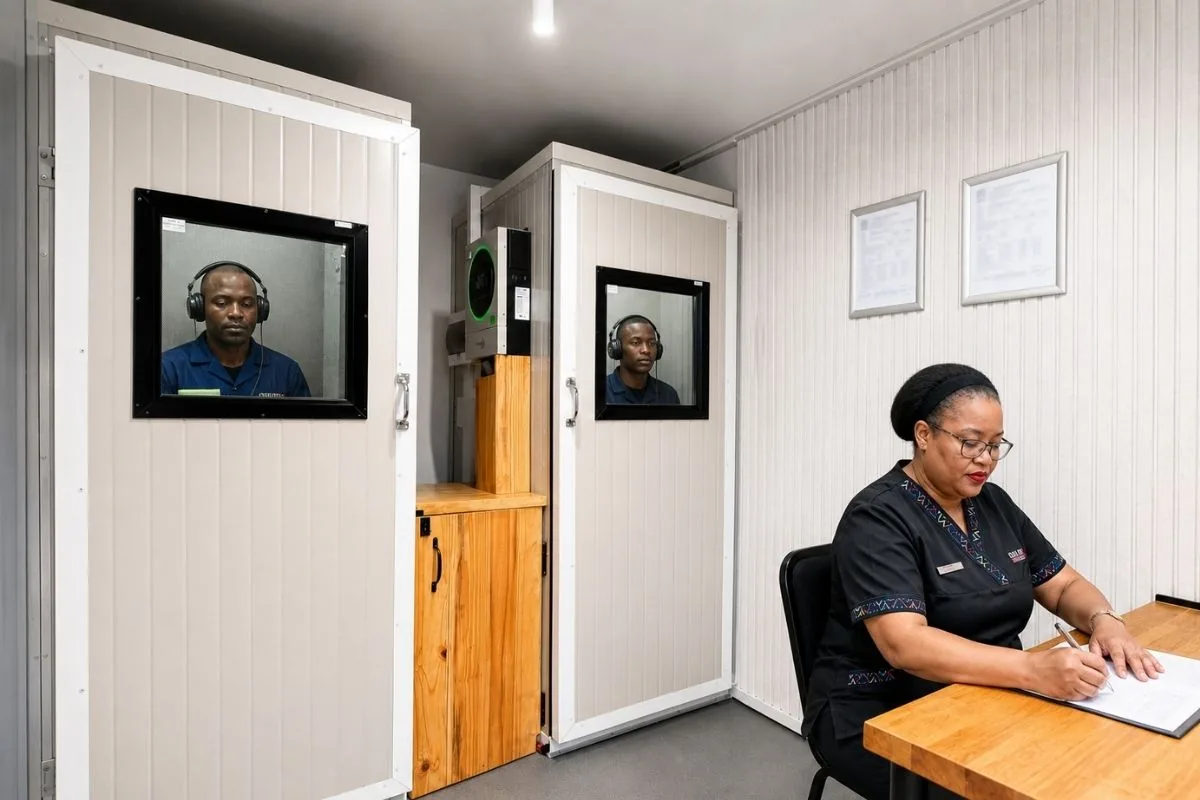
Three new mobile clinics
We have added three new mobile clinics to the fleet. Each one carries double hearing booth capacity, which means audiometric assessments that previously formed a queue at your site now run two at a time.
For a client running a shift based operation, that is the difference between a workforce assessment that interrupts production and one that moves alongside it. It also extends our reach into operations where sending workers to a fixed clinic was never practical.
Clinic coverage
All four fixed clinics are operating: Midrand, Elandsfontein, Brackenfell, and Gqeberha. Combined with the expanded mobile fleet, we can cover fixed site, multi site, and remote operations within the same partnership and the same record system.
A question for you
We are deploying improvements to My Clinic Online almost monthly now. Some land quietly and become the thing you use every day without noticing. We would like to know which ones those are. Tell us which features you actually use and which ones you would want extended, and it will shape what we build next.
Faster Medical Reports, Faster Decisions
Tanya Nel, Director, People and Growth
My Clinic Online is not a medical records system. It is a workforce health intelligence platform, and every change we make to it has to do one of three things: save you time, reduce your compliance risk, or show you something about your workforce you could not see before.
This quarter's change does the first, measurably.
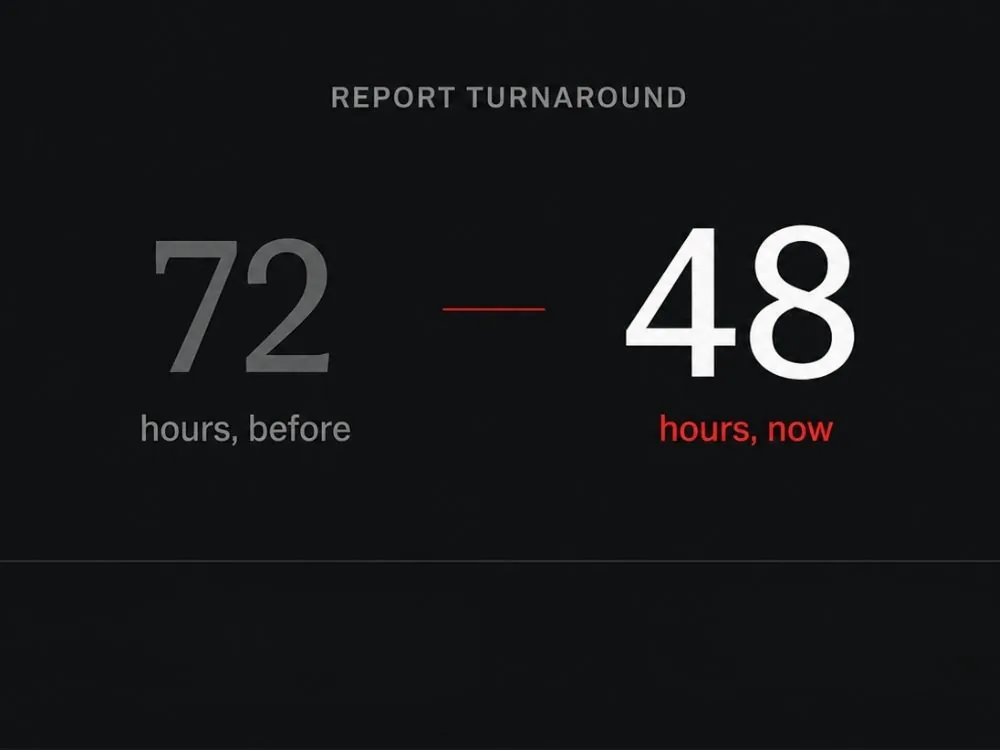
We have made significant back end performance improvements to our reporting platform, reducing report generation time from 72 hours to 48. Where a result is needed sooner than that, a temporary certificate can be issued immediately once payment has been received in full.
What this means for you
- Faster access to medical reports, so decisions are not held up waiting on paperwork
- Reduced turnaround, so workers know their fitness for work status sooner
- Less waiting in your process, and faster workforce deployment
At Care Net we are continually investing in the technology behind the service, so that your business can keep people moving safely and productively.
If you have not looked recently, look again
If you are already on My Clinic Online but have not explored what has changed, our client success team will walk you through it in fifteen minutes. No preparation needed on your side.
Book a fifteen minute walkthrough Tell us which features you use most
Regulatory Update
Three things worth checking before the fourth quarter closes in.
Periodic assessments, and the duty behind them
The Occupational Health and Safety Act places the duty on the employer to identify workplace hazards and to ensure that workers exposed to them are medically assessed at appropriate intervals. That duty does not transfer to your provider. It stays with you, which is why the quality of the record matters as much as the assessment itself.
August is the right month to check that every exposed worker has a current assessment on file, while there is still room to close a gap.
Unfit for duty findings carry consequences beyond the worker
Many employers are unaware that a finding of unfit for duty, whether at pre employment or at a periodic assessment, carries implications under the Compensation for Occupational Injuries and Diseases Act. A finding that is recorded and acted on protects the worker and protects your compensation record. A finding recorded and not acted on does neither.
The fourth quarter is audit season
Clients in manufacturing, mining, and transport are audited most often in the final quarter. Audit preparation and periodic assessment deadlines land in the same weeks, which is precisely why those weeks are the worst time to discover a gap.
Records held in My Clinic Online are retrievable on demand rather than assembled under pressure. That is the difference between an audit that costs you a morning and one that costs you a month.
Please note. This is a general regulatory overview and not legal advice. Your obligations depend on your sector, your hazard profile, and your workforce. Speak to us or to your legal adviser about how these apply to your operation.
Assessing Women Against the Right Baseline
Built on MSHEQ SETA accredited training
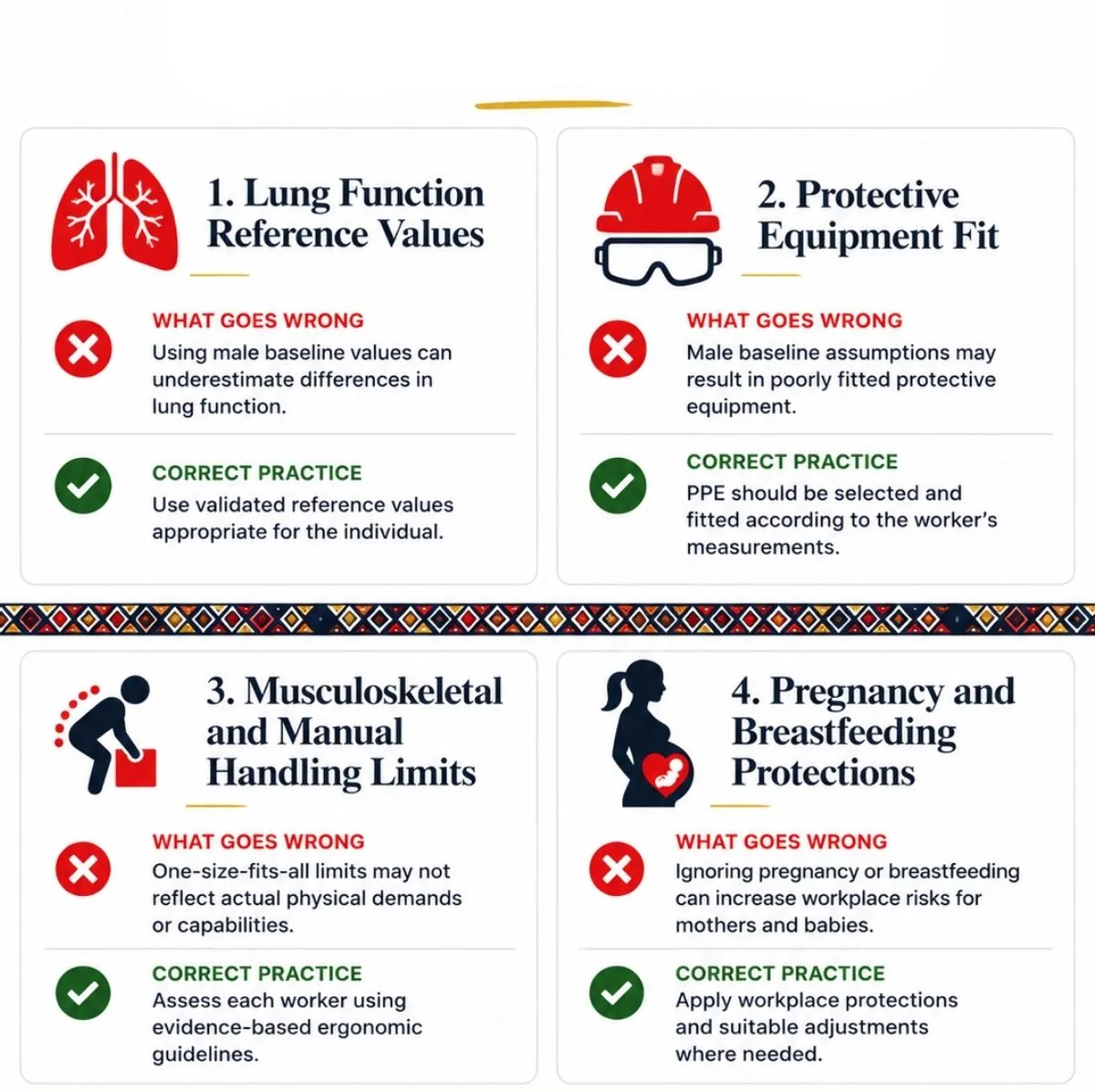
In construction, food handling, manufacturing, and transport, a great deal of occupational health practice was designed around a male default. The reference ranges, the equipment sizing, and in some cases the exposure thresholds were all established using predominantly male populations. Women were added to those workplaces long before the assessments were adjusted to fit them.
Women's Month is the right moment to be specific about what that means in practice.
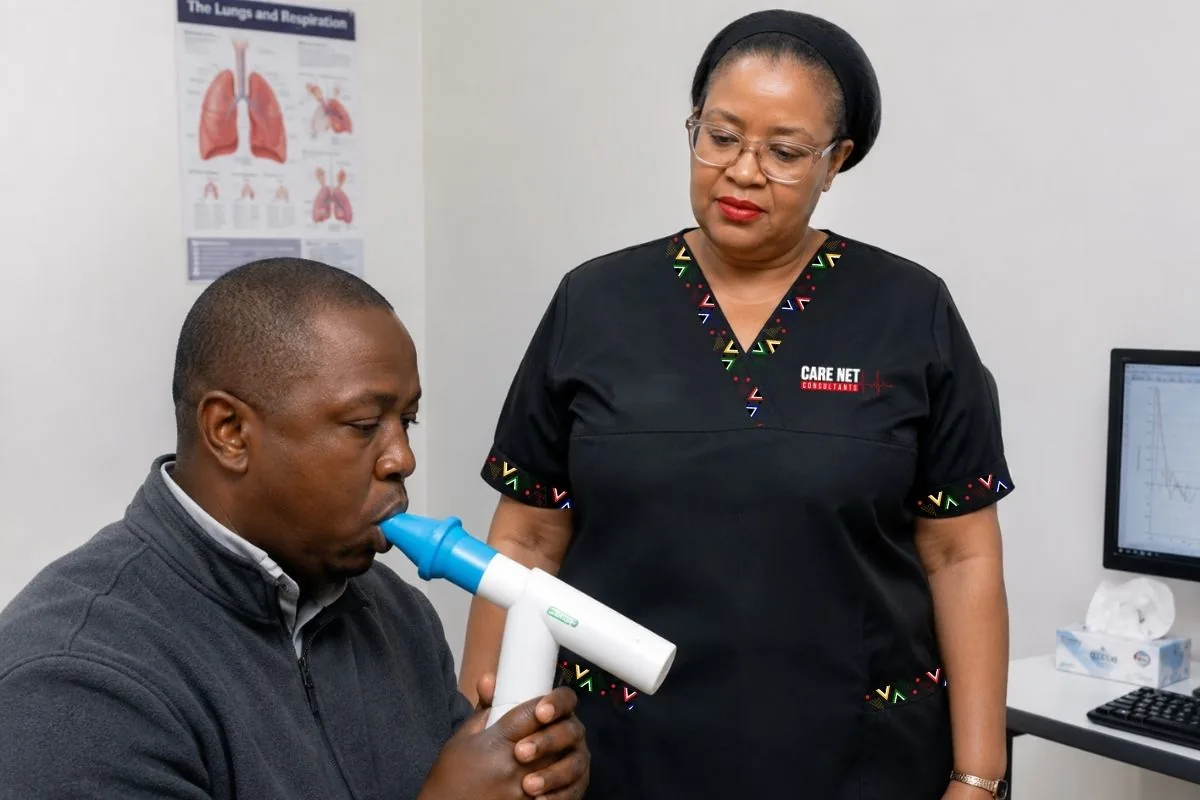
Lung function assessment
Spirometry results are interpreted against predicted values calculated from age, height, sex, and ethnicity. If the wrong reference set is applied, a genuine decline can read as normal, or a healthy result can be flagged unnecessarily. Correct reference selection is not a formality. It is the difference between catching early occupational lung disease and missing it.
Personal protective equipment fit
Respiratory protection performs at its rated level in one circumstance: when it seals. Equipment sized for an average male face frequently does not seal on a smaller face, which means a worker can be fully compliant on paper and inadequately protected in reality. Fit testing, rather than issue and assume, is what closes that gap.
Musculoskeletal and manual handling risk
Manual handling limits built on average male anthropometry do not transfer directly. Task design, lifting thresholds, and workstation height all need to reflect the people actually doing the work.
Pregnancy and breastfeeding at work
The Code of Good Practice on the Protection of Employees During Pregnancy and After the Birth of a Child sets clear employer obligations. Early notification allows a proper risk assessment and adjusted duties, with particular attention to hazardous chemical agents, infectious disease exposure, excessive physical strain, and extreme temperature.
None of this is complicated to get right. It requires an assessment designed for the worker in front of you rather than a template applied to everyone, which is what a gender sensitive occupational health programme actually means.
Please note. This information is educational and general in nature. It is not a diagnosis, and it is not medical advice for any specific worker. Assessment of each worker, and clinical judgement, remain necessary in every case.
Dates Worth Marking This Month
National Women's Day 9 August
In 1956, twenty thousand women marched to the Union Buildings in protest against the pass laws. The day commemorates that march and the phrase it produced: you strike a woman, you strike a rock. For employers, it is a fitting moment to ask whether the women in your workforce are assessed, equipped, and protected on the same terms as everyone else.
National Women's Month Throughout August
The full month carries the commemoration forward. In occupational health terms, it is a practical opportunity to review whether your health programme reflects the actual composition of your workforce, particularly in sectors where female participation has grown faster than the assessment practice around it.
Breastfeeding Awareness Month Throughout August
Breastfeeding employees returning to industrial workplaces need somewhere private and hygienic to express, time within the working day to do it, and protection from exposures that carry through to the child. These are ordinary workplace accommodations, and they are far easier to plan for in advance than to improvise on the day.
Psoriasis Awareness Month Throughout August
Psoriasis is a chronic immune mediated skin condition, not an infection, and it is not contagious. It matters at work for two reasons. Certain occupational irritants and physical trauma to the skin can trigger flare ups, and visible skin conditions are frequently misunderstood by colleagues. Both are addressable through correct protective equipment and basic awareness.
World Elephant Day 12 August
Not an occupational health date, but one that resonates in this part of the world. The herd metaphor is worth borrowing: elephants move at the pace of their slowest member and close ranks around the vulnerable. Most workplace safety cultures that actually function do exactly the same thing.
World Dog Day 26 August
Used in many campaigns as an entry point into mental health and companionship. Occupational health has moved well beyond the physical, and the quieter risks of stress, isolation, and burnout are now among the most significant drivers of lost productivity in South African workplaces. A light hearted date is often the easiest way to open a conversation that is otherwise difficult to start.
Is Your Workforce Ready for Q4?
Clients in manufacturing, mining, and transport are most often audited in the fourth quarter. August is the right time to find the gaps, while there is still room to close them. Work through the list below.
If any of those gave you pause, that is useful information in August and an expensive discovery in November. Talk to us and we will help you work through it.
Tell Us What Would Make This Better
At Care Net Consultants, we believe that every client voice shapes the service we deliver. If something is not working, we want to know. If you have a suggestion that would make your experience better, tell us. If your workforce has a health need we are not yet meeting, speak to us.
This is not a complaints process. It is a partnership conversation. We have created a dedicated, confidential channel for client feedback and we treat every input as a priority.
Four Things You Can Do This Month
Book assessments before Q4
Workers due for periodic assessments should be booked before the fourth quarter compression.
Book nowSee what is new in My Clinic Online
A fifteen minute walkthrough with our client success team. No preparation needed.
Book a walkthroughBook MSHEQ accredited training
The September and October SETA accredited training calendar is open.
See the calendarGet sector specific news
Our industry newsletter covers occupational health developments by sector.
SubscribeThank You
This month we mark the women who build the workforces we serve. The ones on the plant floor, in the cab, in the cold room, and on the scaffold, in sectors that did not always expect them and have not always adjusted to them. They deserve an occupational health programme designed for who they actually are, and that is work we intend to keep doing properly.
Thank you for the trust you place in us. It is a competitive market and you have real alternatives. We do not take the choice lightly, and we will keep working to deserve it.
Your Partner in Workplace Health
Your Partner in Workplace Health
Care Net Consultants
- Midrand, Elandsfontein, Brackenfell, Gqeberha
- Mobile clinics nationwide
- salesdesk@carenetconsultants.co.za
Care Net Consultants · August 2026 Client Newsletter
Midrand · Elandsfontein · Brackenfell · Gqeberha, and mobile clinics nationwide
Book an assessment Speak Out Industry newsletter
Enjoyed working with us? A Google review helps other organisations find us.