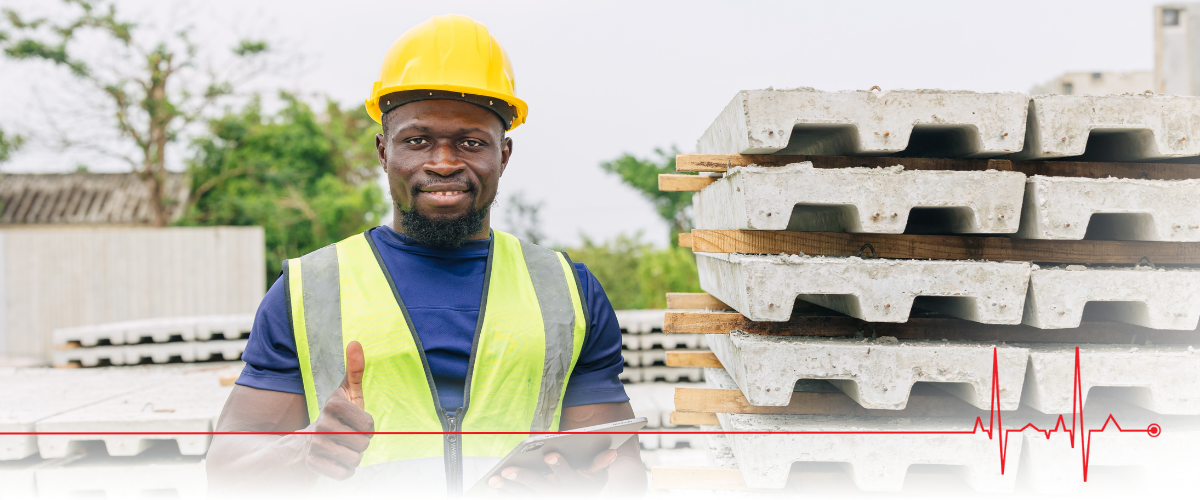
The construction industry is one of South Africa’s most high-risk working environments. From working at heights and operating heavy machinery to exposure to noise, dust, vibration, and hazardous chemicals, construction workers face daily risks that can lead to serious injuries or long-term occupational disease. While safety helmets and harnesses are highly visible controls, one of the most critical — and often overlooked — protections is Medical Surveillance.
Medical surveillance is not simply a tick-box exercise; it is a legal requirement under the Occupational Health and Safety Act (Act 85 of 1993) and the Construction Regulations (2014). More importantly, it is a proactive system designed to detect health risks early, confirm fitness for duty, and protect both workers and employers from preventable harm.
Construction Risks Demand Health Monitoring
Construction sites expose workers to a wide range of occupational health hazards. These include musculoskeletal strain from manual handling, noise-induced hearing loss from machinery, respiratory illness from silica dust and fumes, vibration-related disorders, and serious injury risks associated with working at heights or operating heavy equipment. Without structured medical surveillance, these risks can remain undetected until they result in accidents, chronic illness, or permanent disability.
Medical surveillance in the Construction Industry ensures that workers are medically fit to perform their specific tasks and that early warning signs of occupational disease are identified before they escalate. This is particularly critical in safety-sensitive roles, such as those of crane operators, scaffolders, heavy equipment drivers, and workers operating at elevated heights.
Legal Compliance and Employer Responsibility
Under South African law, employers have a duty of care to provide and maintain a working environment that is safe and free from health risks. This includes conducting Hazard Identification and Risk Assessments (HIRAs) and implementing medical surveillance where risks exist. The Construction Regulations further require role-specific health assessments, such as working-at-heights medicals and operator fitness evaluations.
Failure to comply can result in fines, work stoppages, project delays, reputational damage, and liability under the COID Act. Medical surveillance provides documented proof of compliance and demonstrates that the employer has taken reasonable steps to protect workers’ health.
What Medical Surveillance Looks Like in Construction
A compliant medical surveillance programme typically includes:
- Baseline/ General medicals are conducted before placement to establish a health benchmark.
- Periodic medicals to monitor ongoing exposure to noise, dust, vibration, and physical strain.
- Working-at-heights medicals to assess balance, cardiovascular health, and psychological readiness.
- Operator and heavy equipment medicals focusing on vision, hearing, reaction time, and musculoskeletal fitness.
- Biological monitoring where workers are exposed to hazardous substances.
Each assessment is guided by a completed Annexure 3 (Man Job Spec Form), ensuring medicals are aligned to job-specific risks.
Business Benefits Beyond Compliance
A well-implemented medical surveillance programme delivers measurable business value. It reduces absenteeism, prevents costly accidents, limits COIDA claims, and supports uninterrupted project timelines. Fit-for-duty workers are safer, more productive, and more confident on site. Over time, this fosters a stronger safety culture, enhances morale, and cultivates trust among employers, contractors, and workers.
Learn More in the Construction Health Guide
Medical surveillance is a cornerstone of sustainable construction operations. To help employers navigate legal requirements and implement effective programmes, Care Net Consultants has developed a comprehensive Construction Industry Occupational Health Guide.
📘 Download the Construction Health Guide to access:
- Role-specific occupational health risks
- Recommended medical surveillance by job type
- Biological monitoring requirements
- Critical PPE guidance across construction phases
Partnering for Safer Construction Sites
At Care Net Consultants, Your Partner In Workplace Health, we provide legally compliant, risk-specific occupational medicals tailored to the construction industry. With fixed clinics in Gauteng, Western Cape, and Eastern Cape, as well as 16 mobile clinics nationwide, we make compliance simple and accessible. Our MyClinicOnline platform ensures medical records are securely stored and available 24/7.
Protect your workforce. Strengthen compliance. Build safer sites from the ground up.
Book your team’s occupational medicals with Care Net Consultants today and take the next step toward a healthier, compliant construction site.
← Back to all articles