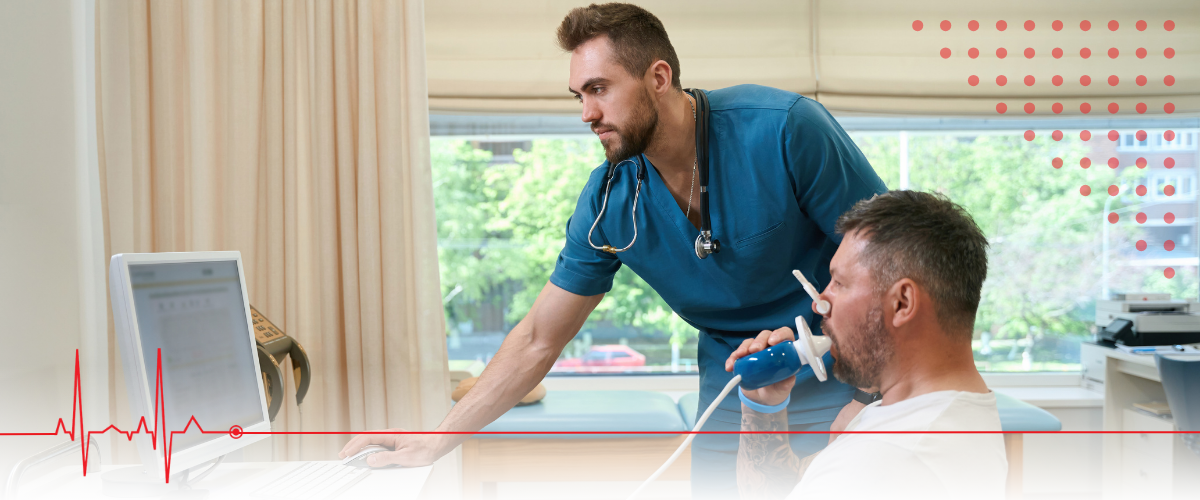
Lung health is a crucial yet often overlooked aspect of workplace safety in industries where employees are regularly exposed to dust, chemicals, fumes, or other airborne hazards. One of the most effective ways to detect early signs of lung disease is through a Spirometer test—a simple, non-invasive assessment that measures lung function.
What Does a Spirometer Test Measure?
A Spirometer test evaluates how well the lungs are working by measuring:
Lung capacity – How much air a person can inhale and exhale.
Airflow rate – How quickly air moves in and out of the lungs.
Obstruction detection – Identifies early signs of chronic conditions like asthma, COPD (Chronic Obstructive Pulmonary Disease), and occupational lung diseases.
By performing a regular Spirometer test, workers can detect early signs of lung impairment, allowing for timely medical intervention and lifestyle adjustments before serious damage occurs.
Why Should Spirometer Testing Be a Part of Routine Health Checkups?
- Early Detection of Lung Disease – Many lung conditions develop silently over time. Spirometry helps detect issues before symptoms appear, allowing for preventative care and treatment.
- Workplace Safety & Compliance – Certain industries require routine lung function testing to ensure workers meet occupational health and safety standards as per the Occupational Health and Safety Act 85 of 1993 and other additional industry regulations.
- Protecting Employee Well-being – Regular lung screenings help workers stay healthy, productive, and safe, reducing absenteeism due to respiratory illnesses.
Who is Most at Risk for Lung Damage?
Workers in high-risk environments should undergo routine lung screenings, including Spirometer tests, to protect against occupational lung diseases. The following industries are especially at risk: check our medicals page for more: https://carenetconsultants.co.za/medicals/
- Construction – Exposure to dust, cement, and asbestos.
- Manufacturing & Engineering – Inhalation of industrial fumes, chemicals, and fine particles.
- Transport & Logistics – Long-term exposure to diesel fumes and poor air circulation.
- Cleaning, Hygiene & Recycling – Chemical exposure from cleaning agents and waste processing.
- Agriculture & Abattoir – Airborne contaminants from grain dust, animal dander, and pesticides.
- Mining – Silica dust exposure, increasing the risk of lung disease.
What Happens During a Spirometer Test?
A Spirometer test is quick, painless, and non-invasive, taking only a few minutes to complete. Here’s what a patient can expect during the test:
- Preparation: The healthcare professional will explain the test and ensure the patient is standing comfortably. The patient will be instructed to breathe into a new and clean tube connected to a spirometer, which records lung function parameters.
- Deep Inhalation: The patient will be instructed to take a deep breath and fill their lungs completely.
- Forceful Exhalation: The patient must blow out as hard and fast as possible into a tube connected to the spirometer device. This measures lung strength and airflow.
- Repeat for Accuracy: The test is usually repeated 2-3 times to ensure consistent and reliable results.
- Assessment of Results: The healthcare provider will analyse the readings to screen whether lung function is within a healthy range or if further testing is needed.
At Care Net Consultantswe prioritize workplace health and safety by offering:
On-site and walk-in Spirometer tests at our 4 fixed clinics and nationwide mobile clinics.
Early detection & expert assessments for all employees in high-risk industries.
Legally compliant medical screenings to ensure your workforce meets industry regulations.
Early detection saves lives. Protect your employees’ respiratory health with routine lung function testing. #CareNetConsultants #YourPartnerInWorkplaceHealth #LungHealth #Spirometry #WorkplaceSafety #OHSCompliance #BreatheEasy #OccupationalHealth #RespiratoryWellness #EmployeeHealth #EarlyDetectionSavesLives #WorkforceProtection #OnSiteMedicals
← Back to all articles