Winter Respiratory Health in the Workplace.
The season that tests every workforce, and the partnership that protects it. Honouring Mandela Day, 18 July. Your Partner in Workplace Health.

01 · A Word From Us
We are your partner, not your supplier.
Winter arrives the same way every year, and every year it finds the workplaces that were ready and the ones that were not. The cold settles into the early shifts. A cough travels down a production line. A field team loses a morning to a chest that will not clear. None of this is dramatic. That is exactly why it is dangerous. Winter rarely announces itself. It accumulates.
At Care Net Consultants we have spent more than a decade walking into South African workplaces in the coldest months, and we have learned that respiratory health in winter is never a medical matter alone. It is an operational one. It shapes absenteeism, productivity, compliance, and the simple dignity of a worker who can breathe easily on the job.
This newsletter is written in that spirit. Not as a service provider sending an update, but as a partner who shares responsibility for the health of your people. We are your partner in workplace health, and in winter that partnership matters most.
02 · 18 July
Mandela Day, creating a lasting impact.

At Care Net Consultants, we believe that making a difference does not always happen in a single day. It happens when we create something that keeps improving lives long after the moment has passed.
This Mandela Day, our team will dedicate our 67 minutes to developing practical health education resources that can be freely shared with people, workplaces and communities across South Africa. By giving our time, our knowledge and our professional expertise, we hope to equip people with reliable information that helps them make healthier choices, prevent illness, and better understand their own wellbeing.
Our clinicians, nurses, occupational health practitioners and support teams are working together to create educational content that will keep serving communities well beyond Mandela Day. It is our way of honouring Madiba's legacy, by sharing knowledge, promoting dignity through healthcare, and helping build healthier communities for generations to come.
Because when knowledge is shared, it never runs out. It grows.
If your organisation would like to take part with us this Mandela Day, we would be glad to bring a health gesture to your site. Speak to your Care Net contact and we will arrange it together.
03 · Winter Readiness Quiz
Is your workplace ready for winter?
Six quick questions. No diagnosis. No personal data. A directional read on whether your team is prepared for the season ahead.
The Six Questions
01.Have you scheduled an on-site flu vaccination drive for the first half of winter?
02.Do workers exposed to dust, fumes or cold have a current respiratory surveillance baseline?
03.Are your indoor spaces still ventilated when the heaters are running?
04.Have your gas or paraffin heaters been serviced and checked for carbon monoxide risk?
05.Do field and outdoor teams have warm breaks, dry clothing, and an eye kept on the most exposed?
06.Would a worker with a cough that will not clear feel safe to speak up early, without judgement?
04 · The Authority Spine
Why winter is the season that tests every workforce.
Winter concentrates respiratory risk. Cold air, crowded indoor spaces, recirculated heating and the natural circulation of seasonal viruses combine to place more strain on the lungs of a working population than any other time of year. For employers, this shows up as higher absenteeism, slower output, and a rise in conditions that were quietly developing long before anyone noticed.
Who carries the most risk
- Field and outdoor teams who work in the cold and the damp.
- Workers in crowded indoor settings where air is shared and seldom refreshed.
- Teams in dusty, mining or industrial environments where the lungs are already under load.
- Older workers, and anyone living with an existing respiratory or cardiac condition.
Why so much goes undetected
Most winter respiratory decline hides in plain sight. A persistent cough is written off as a seasonal cold. A worker pushes through because the work needs doing. Without a baseline measure of lung function, there is nothing to compare against, so a slow decline looks like nothing at all, until it becomes something serious. This is the quiet cost of winter, and it is preventable.
What changes when an employer acts
When an employer treats winter as a planned health event rather than a season to endure, the picture changes. Respiratory surveillance and spirometry catch a decline in lung function while it can still be reversed or managed. A flu vaccination drive keeps a team on its feet through the worst weeks. Early detection of tuberculosis protects not one worker but everyone who shares that space. Acting early is cheaper, kinder, and far less disruptive than reacting late.
05 · Accountability and Transparency
Our 2026 fee position, holding steady with you.
At Care Net Consultants, we recognise that businesses across South Africa continue to face rising operating costs, from fuel prices to broader economic pressure. As your occupational health partner, we believe that supporting our clients means more than delivering quality healthcare. It means providing certainty where we can.
For that reason, we have made the deliberate decision to hold our fees flat for 2026.
This is not a short-term concession. It is a reflection of our long-term commitment to the organisations we serve.
We believe strong partnerships are built on trust, consistency and shared success, and that this matters most during challenging economic conditions.
Through the year, our clients can continue to expect the same high standard of occupational healthcare: responsive service, experienced clinical teams, and practical solutions that keep a workforce healthy, compliant and productive.
When our clients succeed, we succeed, together.
06 · The Risks Up Close
The winter risks, and how a prepared employer answers each one.

1. Flu, and the value of vaccination
Seasonal influenza is the most predictable winter risk, and the most preventable. A single unwell worker can move a virus through a shift in days. An annual flu vaccination drive, delivered on site so no one loses a day travelling, is the most cost-effective winter health measure an employer can take. It protects each worker and the wider team, and it keeps productivity steady through the months when it usually dips.
2. Tuberculosis in shared and crowded spaces
South Africa carries one of the highest tuberculosis burdens in the world, and TB spreads most easily where people share enclosed air for long hours. In winter, when windows stay shut and spaces stay full, that risk rises. Early assessment matters enormously here. A worker identified and supported early can be treated, while an undetected case puts a whole team at risk. This is both a health priority and a duty of care.
3. Cold exposure for field teams
For teams working outdoors or in unheated spaces, cold is not a discomfort to tolerate. It reduces manual dexterity, slows reaction time, places strain on the heart, and raises the risk of cold-related illness. Practical protection matters: proper layering, dry clothing, warm breaks, and an eye kept on the most exposed members of a crew.
4. Indoor air and heater safety
The instinct in winter is to seal a room and switch on a heater. That instinct carries two hidden risks. Poorly ventilated gas and paraffin heaters can release carbon monoxide, a colourless and odourless gas that is genuinely dangerous in an enclosed space. And air that is never refreshed simply recirculates whatever virus is already in the room. Ventilation and safe heating are not luxuries in winter. They are controls.
5. Respiratory surveillance and spirometry, the response
The thread that runs through all of this is measurement. Respiratory surveillance, built around spirometry, gives an employer a baseline for every worker exposed to respiratory risk and a way to track change over time. It turns winter from a guessing game into something an employer can see, manage and act on. For workplaces with dust, fumes or other respiratory hazards, it is also a clear compliance expectation under occupational health law.
07 · Practical
Ten ways to stay healthy and ready for work this winter.
None of these are new. All of them work. Share with your team, your family, or in your own mirror.
Vaccinate early
Get your flu vaccination early, before the season peaks. An on-site drive keeps the whole team protected.
Wash hands often and well
Keep sanitiser handy in the field. Simple, and it works.
Stay warm and dry
For field teams, change out of wet clothing quickly. Cold and damp are what wear a body down.
Ventilate, even with the heater on
Keep indoor spaces moving air. Fresh air carries less of whatever is going around.
Use heaters safely
Never sleep in a closed room with a gas or paraffin heater burning. Carbon monoxide is silent.
Keep drinking water
Winter dehydration is real, and warm fluids count. Your focus depends on it.
Keep moving
Activity supports circulation and immunity. A short walk most days does more than you think.
Protect your sleep
The body does much of its repair work at night. Guard the hours.
Eat for immunity
Colourful vegetables, citrus and warming foods all help carry you through the cold.
Speak up early
Speak up about a cough that will not clear, especially in crowded or dusty workplaces. It is a strength, not a weakness.
08 · The Drink
The Care Net Winter Wellness Tonic.
Good winter health is built from small daily habits, and a warm, immune-supporting drink is one of the easiest to share around a workplace. Set the number of mugs and the recipe scales with you.

09 · What Is New, and What Is Coming
Where we are now, and where we are heading.
Strengthening data protection and POPIA compliance
Protecting personal and medical information has never mattered more. As expectations under the Protection of Personal Information Act continue to shape how healthcare providers handle sensitive information, Care Net Consultants remains committed to the highest standards of privacy, security and confidentiality.
To further protect worker information, medical certificates and other sensitive medical documents sent electronically will be password protected before they leave us. Access will require the worker's identification details, adding a further layer of security against unauthorised access.
We are also placing greater emphasis on accurate, informed and well-documented consent throughout the occupational health process. Employers will receive the information they are lawfully entitled to receive and that is appropriate for the service being provided, which keeps us aligned with POPIA while respecting every worker's right to privacy.
What is coming
We are building, and we are glad to share where we are heading.
We are researching a new, granular approach to POPIA compliance that brings genuine workplace solutions to even the smallest South African companies. The aim is simple: to help an organisation stay legally compliant while also managing its referrals effectively, through an affordable solution that includes COIDA management at a small fixed monthly rate. Pilot studies will begin in the coming months.
We are also building our own proprietary telemedicine and mental wellness applications, designed to manage and provide preventative care tailored to workplace health. Some of these solutions will extend affordable cover to workers' families.
Soon to launch is our proprietary mental wellness app, built on trusted self-help psychology frameworks. It will offer breathing exercises, guided meditation in several African languages, and a built-in learning space where workers can understand why occupational health exists, understand their own conditions, and learn practical preventative measures.
We are walking the extra mile to focus on the health of your people, not a compliance exercise alone.
All of this builds on MyClinicOnline, our own platform, which already gives you reporting at both the worker level and the company level, so the health of your workforce is something you can see, not guess at. If you are not yet using your company-level reporting, your Care Net contact can switch it on for you.
MyClinicOnline is the digital and medical backbone of Care Net Consultants. Built internally. Owned by us. Improved every month with your feedback.
10 · Quick Answers
Common winter questions from employers.
When should we run our flu vaccination drive?
Early, before the season peaks. An on-site drive in the first half of winter protects your team through the weeks when influenza usually moves fastest, and it keeps your people on the job rather than queuing off site.
What is respiratory surveillance, and who needs it?
Respiratory surveillance, built around spirometry, gives you a baseline measure of lung function for every worker exposed to respiratory risk, and a way to track change over time. It is expected wherever workers are exposed to dust, fumes or other respiratory hazards, and it lets you act on a decline early.
Are your 2026 fees increasing?
No. We have made the deliberate decision to hold our fees flat for 2026, as a partnership commitment during a period of rising costs for the organisations we serve.
How do you protect our workers' medical information?
Medical certificates and sensitive documents sent electronically are password protected, with access requiring the worker's identification details. This sits inside our wider commitment to the Protection of Personal Information Act and careful, documented consent.
11 · Listen and Learn
The Sister Thandi podcast.

Occupational health is easier to act on when it is explained simply. Sister Thandi turns workplace health into clear, practical conversation for employers and workers alike. Twenty-seven episodes. Pick the one your team needs this winter. Plays inline.
Episode 14 · Breathing Easy: Lung Function and Spirometry
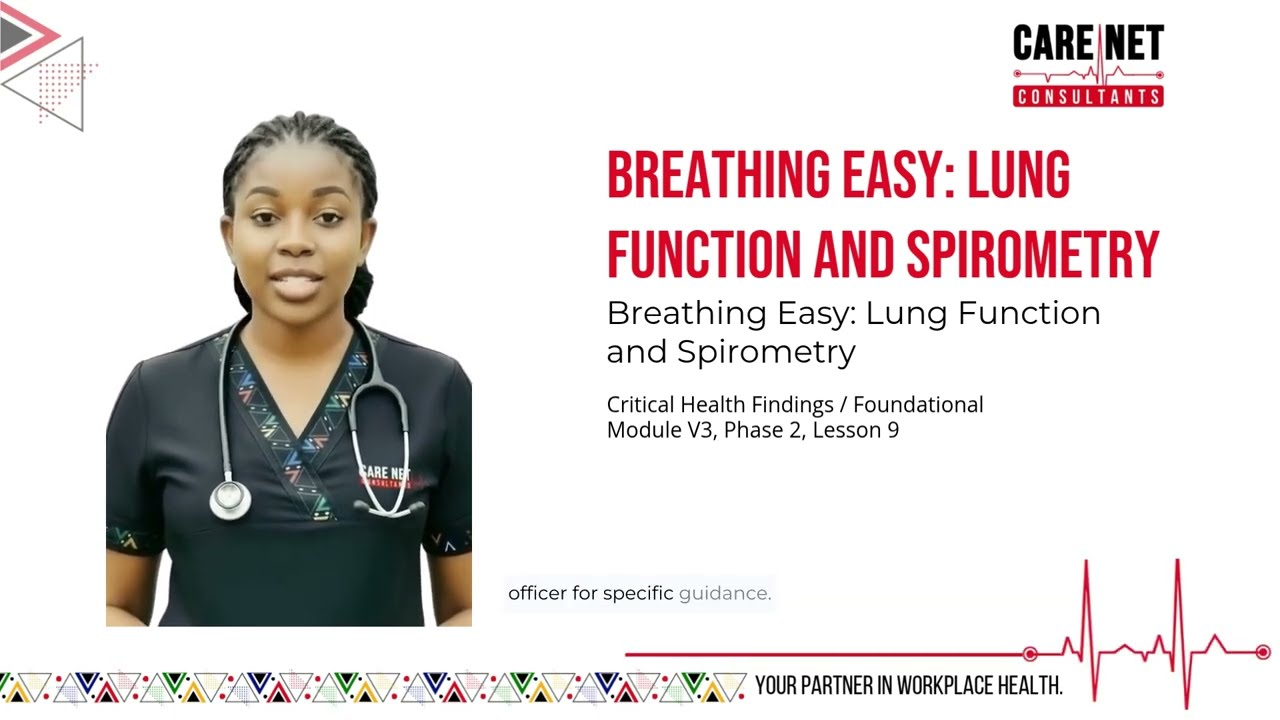 Watch · Breathing Easy: Lung Function and Spirometry
Or browse the full library: youtube.com/@carenetconsultantsSouthAfrica
12 · July Awareness Calendar
Dates worth marking.
Source: National Department of Health 2026 Health Awareness Calendar. A reference for planning your winter health activity.
13 · Put the Partnership to Work
How to act this winter.
Winter rewards the prepared. Here is how to turn this partnership into action for your team.
Primary Action
Book a winter wellness or flu drive
On site, so your team loses no time travelling. We bring the clinic to you and keep your people protected through the season.
Secondary
Book a medical or surveillance assessment
Periodic, exit or risk-based assessments, including respiratory surveillance and spirometry, scheduled around your shift patterns.
Tertiary
Share your experience
A short Google review helps other South African employers find a partner they can trust.
14 · POPIA-Compliant Signup
Industry updates, tailored to your sector.
We are releasing industry-specific newsletters. The latest occupational health updates, legislative changes, and training video resources you can share with your employees.
Pick your industries
 Construction
 Food Handling
 Agriculture & Abattoir
 Manufacturing & Engineering
 Transport & Warehousing
 Cleaning, Hygiene & Recycling
 Telecommunications
 Safety & Security
 MiningPublic Sector
What you want to receive
Single opt-out at any time. We do not sell, share, or repurpose your data. Our full POPIA notice is on our website.
15 · Speak Out
Your voice shapes our service.
A partnership depends on both sides being able to speak openly. If something in our service did not meet your expectation, we want to hear it, because a concern raised early is a problem we can solve. If you have an idea that would make your team's medical experience better, tell us. We are listening, and we act on what we hear.
And if we have served you well, a short Google review helps other South African employers find a partner they can trust. It takes a minute, and it means a great deal to our teams.
A closing thought for winter. We measure our work not by the assessments completed, but by the workers who stayed well, the teams that stayed productive, and the trust that deepened between us and the organisations we serve. Winter rarely announces itself. It accumulates. So does the value of acting early.
Looking ahead, we are building toward becoming South Africa's partner in workplace health: a granular POPIA solution for smaller companies, proprietary telemedicine, and a mental wellness app with guided meditation in several African languages. We will share more as each one is ready.
Thank you for walking this season with us. Thank you for the workers who will breathe easier on the job because you treated their health as a planned event, not a season to endure. We are proud to stand with you.
Care Net Consultants
Your Partner in Workplace Health.