Wine Industry Occupational Health Guide
The wine industry is central to South Africa’s economy, supplying both local markets and global exports. Behind every glass of wine lies a chain of workers exposed to unique occupational hazards:
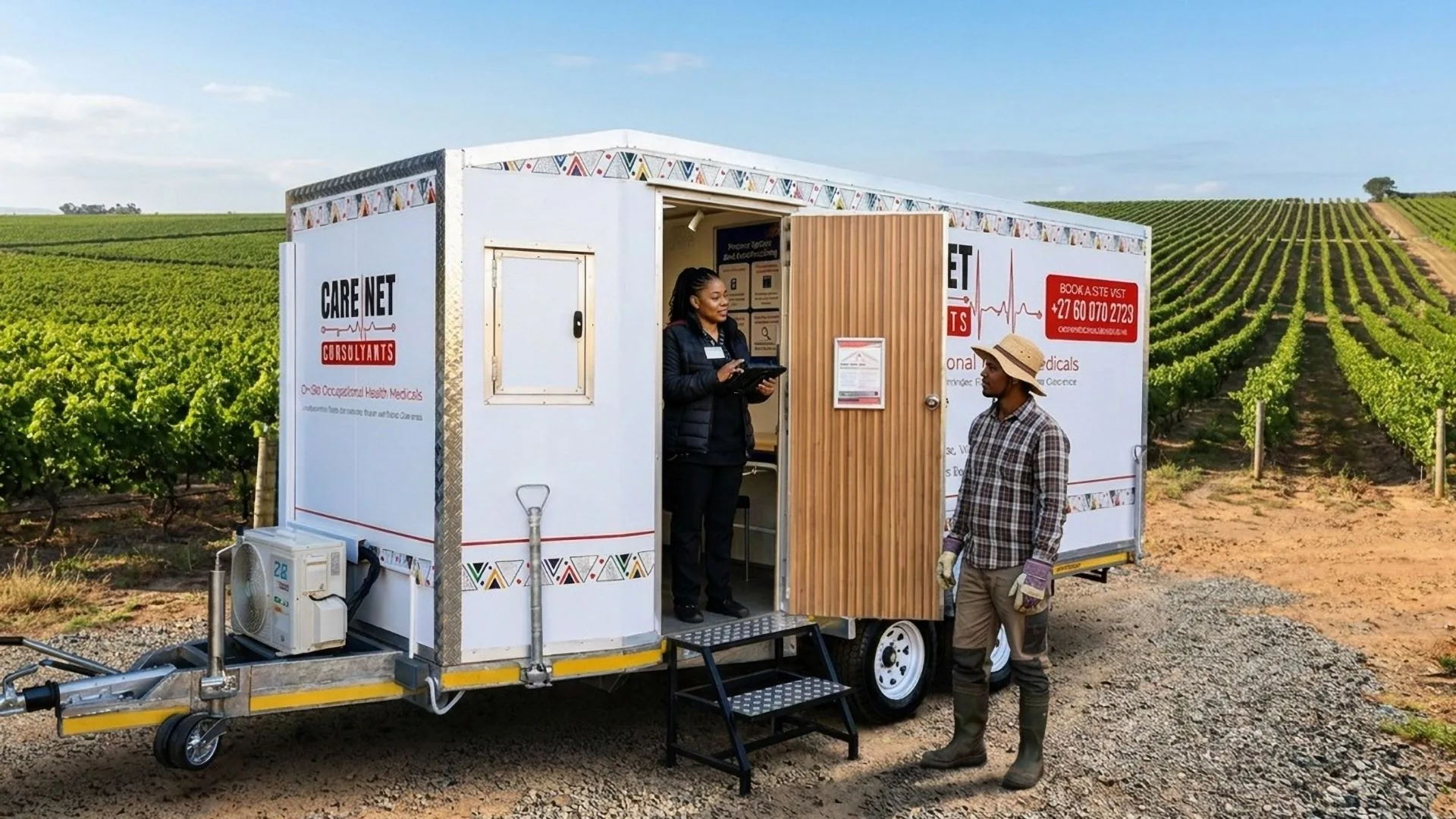
Health Behind the Vineyard and Cellar
The wine industry is central to South Africa’s economy, supplying both local markets and global exports. Behind every glass of wine lies a chain of workers exposed to unique occupational hazards:
- Farmworkers exposed to sun, pesticides, and musculoskeletal strain in vineyards.
- Cellar staff exposed to confined spaces, CO₂ from fermentation, and cleaning chemicals.
- Bottling and packaging staff working with repetitive tasks, noise, and machinery.
- Export and logistics workers exposed to warehouse hazards and global hygiene compliance requirements.
As an employer in the wine industry, you are more than a steward of the land and cellar, you are a legal custodian of worker health. The Occupational Health and Safety Act, 1993 (OHSA) requires employers to identify hazards, provide medical surveillance, and enforce protective measures.
Legal Foundations: Understanding Your Duty of Care
Employers in the wine sector must comply with:
- Occupational Health and Safety Act No. 85 of 1993 (OHSA)
- General duty of care, hazard identification, medical surveillance.
- Hazardous Chemical Agents Regulations (2021)
- Pesticides, cleaning solvents, sulphur dioxide, preservatives.
- Hazardous Biological Agents Regulations (2001)
- Risks of fungal spores, yeasts, and pathogens in production.
- Driven Machinery Regulations (2015)
- For forklifts, conveyors, crushers, and bottling equipment.
- Noise-Induced Hearing Loss Regulations (2003)
- For bottling halls and workshops.
- General Hygiene Regulations for Food Premises (R638 of 2018)
- For cellar, bottling, and storage hygiene.
- Foodstuffs, Cosmetics, and Disinfectants Act (1972)
- Compliance with food safety standards.
- ISO 22000 & HACCP
- Internationally recognised food safety and quality standards for wine production.
- Export Standards (DAFF, EU, USA, Asia)
- Export wine requires compliance with international worker health and hygiene standards to maintain market access.
Non-compliance risks fines, COIDA claims, export rejection, reputational damage, and worker illness/ injury.
Why Compliance Matters
- Food Safety + Worker Safety: Ensures safe wine production for consumers and protects worker wellbeing.
- Early Detection of Risks: Prevents respiratory illness, hearing loss, skin dermatitis, and ergonomic strain.
- Operational Continuity: Keeps harvest, fermentation, and export cycles on track.
- Financial Protection: Reduces liability, COIDA claims, and costly export shipment recalls.
- Reputation: Builds credibility with regulators, buyers, and export markets.
What’s in it for Wine Industry Employers?
- Risk Reduction: Protect workers from pesticide poisoning, CO₂ exposure, and musculoskeletal injuries.
- Market Access: Comply with export buyer requirements and international safety certifications.
- Financial Savings: Lower absenteeism, fewer accidents, reduced penalties.
- Workforce Retention: Improve morale and reduce turnover during critical harvest seasons.
- Legal Compliance: Aligns with OHSA, COIDA, HACCP, and export laws.
Common Risks in the Wine Industry
- Agricultural Risks: Pesticides, sun exposure, repetitive vineyard labour, heat stress.
- Cellar Risks: CO₂ buildup during fermentation, confined space entry, sulphur dioxide, slips on wet floors.
- Processing Risks: Noise, repetitive strain in bottling, cuts from glass, burns from steam.
- Logistics Risks: Forklift accidents, heavy lifting, dust, diesel fumes in warehouses.
- Biological Risks: Yeast, mould spores, foodborne pathogens.
- Ergonomic Risks: Awkward postures in vineyards, prolonged standing in bottling, manual handling.
- Psychosocial Risks: Fatigue from seasonal harvest shifts, stress from export deadlines.
Purpose of This Guide
This guide supports wine farm owners, cellar masters, bottling managers, logistics supervisors, occupational health officers, and export coordinators by:
- Clarifying South African legal requirements for occupational health in viticulture and winemaking.
- Outlining baseline, periodic, and role-specific medical surveillance.
- Defining biological and chemical monitoring protocols.
- Recommending critical PPE for all phases, from vineyards to export logistics.
- Providing tools to align occupational health with food safety, HACCP, and export certification standards.
Whether you manage a small boutique wine estate or a large export-focused producer, this guide provides a comprehensive occupational health framework to protect your workforce and secure market access.
Medical Surveillance Key Terms and Categories
Occupational Health Risks
The wine industry exposes employees to agricultural, chemical, physical, biological, ergonomic, and psychosocial hazards. Workers may face pesticide exposure, sunburn, CO₂ asphyxiation, noise-induced hearing loss, dermatitis from cleaning agents, musculoskeletal injuries from lifting, and stress from harvest or export pressures. Medical surveillance ensures these risks are identified and managed proactively.
Medical Surveillance Framework
Employers must comply with:
- OHSA (1993), Duty of care, Hazard Identification and Risk Assessments (HIRAs).
- HCA Regulations (2021), Pesticides, sulphur dioxide, solvents, cleaning agents.
- HBA Regulations (2001), Fungal spores, yeasts, pathogens in cellars and vineyards.
- Noise-Induced Hearing Loss Regulations (2003), For bottling and processing plants.
- COID Act, Compensation for occupational injuries/ diseases.
- HACCP & ISO 22000, Food safety and hygiene alignment, especially for exports.
Employers must:
- Conduct baseline and periodic medicals for all staff.
- Submit Annexure 3 job risk profiles to OMPs.
- Maintain confidential records separate from HR.
Baseline Medical
When: Before employment or transfer to wine farm, cellar, bottling, or export roles.Purpose: Establishes fitness for agricultural, cellar, or processing duties.
Components:
- Full medical and occupational history.
- Vision testing (distance, near, colour).
- Audiometry (baseline for bottling/ cellars >85 dB).
- Spirometry (dust, sulphur dioxide, fermentation gases).
- Skin exam (dermatitis from pesticides/ chemicals).
- Cardiovascular screening (BP, ECG if high risk, especially for cold store).
- Infectious disease screening (TB where required, Hepatitis vaccination review).
- Fitness-to-work certificate for agricultural/ production tasks.
Frequency: Once before placement.
Risk-Based Medical
When: For high-exposure roles.
- Vineyard Workers: Pesticide exposure (cholinesterase monitoring), musculoskeletal exams, sun/ heat tolerance checks.
- Cellar Workers: Spirometry, hearing, CO₂ and SO₂ exposure screening, confined space fitness.
- Bottling Operators: Hearing, musculoskeletal, ergonomic assessments.
- Cold-Store/ Export Workers: Cardiovascular, respiratory, hearing, cold-stress screening.
- Supervisors/ Managers: Stress and fatigue assessments, cardiovascular monitoring.
Frequency: Annual, or 6-monthly in high-risk exposures.
Vineyard Worker Medical
- Focus: Pesticide exposure, repetitive strain, sun/ heat stress.
- Includes: Spirometry, cholinesterase monitoring (if organophosphates used), skin checks, cardiovascular exam.
- Vaccinations: Tetanus, Hepatitis A/ B.
- Frequency: Annual, pre- and post-spray season.
Cellar Worker Medical
- Focus: Fermentation gas (CO₂, SO₂), confined spaces, noise, slips on wet floors.
- Includes: Spirometry, hearing tests, vision (low light), skin checks.
- Special Tests: CO₂ and SO₂ exposure checks, confined space clearance.
- Frequency: Annual with ad hoc after gas exposure incidents.
Bottling and Packaging Worker Medical
- Focus: Noise, repetitive strain, glass handling, chemical exposure from cleaning.
- Includes: Audiometry, musculoskeletal/ ergonomic assessment, skin exams.
- Frequency: Annual.
Export/ Warehouse Worker Medical
- Focus: Diesel fumes, heavy lifting, forklift hazards, cold exposure.
- Includes: Vision, hearing, MSK, spirometry, stress/ fatigue screen.
- Frequency: Annual, with ad hoc for accidents/ exposures.
Ad Hoc or Special Medical Assessments
Triggered By:
- Pesticide or chemical spills.
- CO₂ or SO₂ exposure in cellars.
- Forklift or machinery accidents.
- Heat/ cold stress events.
- Post-trauma incidents (fires, contamination).
Includes:
- Focused tests (blood cholinesterase, COHb, skin patch testing).
- Specialist referrals (dermatology, pulmonology, cardiology, psychology).
- Return-to-work clearance from OMP.
Recommended Tests and Risk Analysis Methods
The wine value chain combines agriculture (vineyards), processing (cellars), packaging (bottling) and export logistics. Surveillance must therefore blend biological, chemical, physical, ergonomic, environmental and psychosocial controls.
Physical Health Tests
- Musculoskeletal Examination (MSK): Baseline and periodic assessment of spine/ shoulders/ wrists/ knees for pruning, harvesting, hose dragging, barrel handling and repetitive bottling tasks.
- Cardiovascular Screening: BP at minimum; ECG when indicated for cold-store work, confined-space standby teams, heavy manual handling, heat-stress roles and night shifts.
- Spirometry (Lung Function): Baseline + periodic for exposure to SO₂, CO₂, organic dust (grape/ yeast aerosols), cleaning aerosols, diatomaceous earth and winery mists.
- Dermatologic Exam: Detects pesticide/ cleaner dermatitis, contact urticaria (sulphites), latex/ nitrile sensitivities, grape/ plant sap irritation.
- Infectious Disease Screening: TB symptom screening where relevant; Hepatitis immunisation status for food-contact teams and harvest kitchens.
Sensory & Neurocognitive Testing
- Audiometry: Baseline + annual where LAeq ≥85 dB (bottling halls, crushers/ destemmers, compressors, cooperage, workshops).
- Vision Testing: Near/ distance/ colour and low light for cellar work (dimmer spaces), forklift driving and QC inspection.
- Reaction Time/ Cognitive Screen (safety-critical): Confined-space attendants, forklift drivers, night-shift tank-farm operators.
Psychological & Fatigue Assessments
- Shift Work/ Fatigue Screening: Pre-harvest, mid-harvest and post-harvest; assesses sleep debt, circadian disruption and commute risk.
- Stress/ Anxiety Assessment: Supervisors, winemakers and export coordinators under deadline/ recall pressure.
- Post-Incident PTSD Screening: After gas exposures (CO₂/ SO₂), serious falls, vehicle incidents or export rejection crises.
Biological & Exposure Monitoring
- Cholinesterase (RBC/ AChE) Monitoring: Pre-, mid- and post-spray season where organophosphate or carbamate pesticides are used; remove from exposure if levels drop beyond OMP thresholds.
- Sulphur Dioxide (SO₂) Exposure Checks: Short-term peak sampling during additions, barrel fumigation, CIP and tank purging; correlate with symptoms (eye/ throat irritation, bronchospasm).
- Carbon Dioxide (CO₂) Atmosphere Monitoring: Area/ badge or continuous fixed monitoring in fermentation spaces, tank farms, press bays and cellars (special focus during active ferment).
- Diatomaceous Earth/ Silica Dust: Personal dust sampling during filtration media handling; control to occupational limits.
- Solvent/ Detergent Metabolites: Incident-based testing for peracetic acid, caustic/ acid cleaners and alcohol vapours (spirit fortification, sanitation).
- Hydration Index (Urine Specific Gravity): Vineyard and cellar heat-exposed teams during harvest; cold-store staff in winter.
Environmental & Engineering Surveys
- Confined Space Hazard Assessment: Register all tanks, pits, sumps and presses; baseline gas profile (O₂, CO₂, H₂S, SO₂); ventilation assessment; rescue feasibility; permit-to-work validation.
- Gas Monitoring & Alarm Mapping: Fixed detectors for CO₂ near fermenters and lower levels (CO₂ pooling); portable multi-gas meters for entry teams; alarm setpoints and evacuation drills.
- Ventilation & Dilution Studies: Air changes per hour (ACH) in cellars, tank farms and bottling halls; local exhaust at SO₂ dosing points and CIP chemical mix stations.
- Noise Surveys: Map sources (compressors, bottling lines, crushers); mark hearing protection zones; verify enclosure/ engineering controls effectiveness.
- Lighting Surveys: Low-light cellars, barrel rooms and night harvest staging; ensure lux levels for safe footing and accurate inspection.
- Thermal Stress Assessment: WBGT measurements for summer vineyard work and hot cellars; cold-stress assessments for cold rooms and night barrel halls.
- Ergonomic Assessments:
- Vineyard: Pruning shears vibration, repetitive reach, stoop/ kneel cycles.
- Cellar: Hose handling, valve operations, barrel rolling/ racking, pump placement heights.
- Bottling: Repetitive case packing, palletising, label inspection postures.
- Chemical Storage & SDS Audit: Compatibility matrix (oxidisers vs organics), spill containment (bunding), eyewash/ shower placement, SDS currency.
- Machine Safety Audit: Guards, interlocks, emergency stops, LOTO compliance on crushers, destemmers, presses, conveyors and fillers.
- Forklift & Traffic Risk Assessment: Aisle widths, pedestrian segregation, banksman practices, dock plates and ramp gradients.
HACCP/ ISO 22000 Integration (Occupational ↔ Food Safety)
- Map occupational exposures to food safety CCPs: e.g., SO₂ dosing (worker inhalation & product sulphite limits), sanitation chemicals (splash/ burn risk & residue control), glass breakages (laceration risk & foreign matter control).
- Align medical restrictions with hygiene rules: open wounds/ dermatitis exclusion from food-contact tasks; RTW criteria post-GI illness.
- Document incident linkages: CO₂ event → evacuation → product hold → sanitation verification → release.
Administrative & Programme Controls
- Seasonal Medical Calendar:
- Pre-Harvest: Baselines, heat-stress brief, fatigue/ transport plan, confined-space refresher.
- Mid-Harvest: Fatigue spot checks, CO₂/ SO₂ exposure review, hydration audits.
- Post-Harvest: Incident review, PTSD screening (as needed), cholinesterase post-spray check.
- Permit-to-Work Systems: Confined space, hot work (cooperage/ welding), chemical mixing/ transfer, work at height (tank tops, catwalks).
- Emergency Drills: CO₂/ SO₂ alarm response, confined-space rescue with retrieval device, chemical splash decontamination, fire and ammonia (if refrigeration).
- Contractor Management: Induct cellar service crews, coopers, HVAC/ refrigeration contractors; verify medicals and PPE equivalence.
- Health Recordkeeping: Annexure 3 risk profiles; audiograms, spirometry, cholinesterase logs; exposure results and RTW clearances stored confidentially.
Critical Personal Protective Equipment (PPE) Mapping (Minimum by Exposure)
- Vineyards (Spray/ Handling): Chemical-resistant gloves and suit, rubber boots, P2/ P3 respirator or approved half-face cartridge for pesticide class, face shield/ goggles, broad-brim hat, sunblock (SPF≥30).
- Cellar (General): Slip-resistant steel-toe boots, cut-resistant gloves (hose/ valve handling), safety glasses, high-vis in traffic zones.
- SO₂ Dosing/ CIP: Chemical-resistant apron and gauntlets, splash goggles + face shield, appropriate respirator (acid gas cartridge), emergency eyewash access.
- Fermentation/ Confined Space: Portable multi-gas detector, retrieval harness with tripod/ winch, attendant comms, intrinsically safe lighting, anti-slip fall protection.
- Bottling/ Packaging: Hearing protection (class matched), cut-resistant gloves for glass, safety glasses, ergonomic aids (lift tables, turntables).
- Cold-Store/ Export: Thermal boots/ gloves/ jackets, layered clothing, beanie/ balaclava, hearing protection (fans), high-vis vests, dock-edge fall protection.
- Workshops/ Cooperage: FR overalls, face shield for grinding, respirator for wood/ char dust, leather gloves, hearing protection.
Training & Competence
- Confined Space Entry & Rescue (annual).
- Chemical Handling & SDS Literacy (biannual).
- SO₂/ CO₂ Hazard Awareness and Alarm Response (pre-harvest + refresh).
- Heat/ Cold Stress Management & Hydration (seasonal).
- Manual Handling & Barrel Rolling Techniques (annual).
- Hearing Conservation & Fit-Testing of Hearing PPE (annual).
- First Aid with Eyewash/ Decon for Chemical Splashes (annual).
- Forklift/ MHE Licensing & Refresher (as per regulation).
Surveillance Schedule (Indicative)
- Baseline (pre-placement/ pre-harvest).
- Periodic:
- Annual: MSK, audiometry (noise), spirometry (cellar/ chemical), skin, cardio (selected).
- 6-Monthly: Cholinesterase for OP/ carbamate applicators in active spray seasons; targeted SO₂ exposure reviews in high-use cellars.
- Ad Hoc: After gas alarms/ exposures, chemical splashes, serious incidents, or symptomatic pesticide exposure.
- Exit: For high-risk roles (spray teams, cellar gas-exposed, high-noise bottling).
Entry-Level Roles
3.1 Vineyard Labourer/ Pruner/ Picker
Typical Tasks: Hand-pruning, canopy management (tucking, shoot thinning), tying wires, hand-picking/ field sorting, carrying lugs, trellis repairs, basic agrochemical assistance (non-spray tasks), irrigation checks.
Occupational Health Risks
- Heat stress/ dehydration during summer work.
- Sun/ UV exposure (sunburn, long-term skin damage).
- Musculoskeletal strain (stoop/ kneel, overhead reach, repetitive snipping).
- Hand/ wrist tendonitis from pruning shears.
- Cuts/ punctures from thorns, wire ends, snips.
- Slips/ trips on uneven, wet or rocky terrain.
- Contact dermatitis from plant sap and sulphur dust.
- Eye injuries from rebounding canes/ wires.
- Allergen exposure (pollen, mould on grapes).
- Insect/ bee/ wasp stings; snake/ animal encounters.
- Pesticide drift exposure (if near spray operations).
- Hand-arm vibration (powered shears where used).
- Cold stress during winter pruning; hypothermia in wet weather.
- Fatigue from piece-rate pace/ long days.
- Vehicle/ quad/ tractor proximity hazards in rows.
Medical Surveillance
- Baseline: MSK screen (shoulders/ wrists/ low back), skin exam, vision (near/ distance), respiratory history (allergy/ asthma), blood pressure; fitness for hot/ cold outdoor work.
- Periodic: Annual MSK + skin checks; fatigue/ heat-stress review pre-harvest; allergy review at bloom/ harvest.
- Ad hoc: Post-injury hand assessment; post-sting reactions; post-heat illness clearance.
Biological Monitoring
- Hydration index (urine specific gravity) during heat waves.
- Cholinesterase only if worker occasionally assists with OP/ carbamate spraying (per OMP protocol).
- Allergy evaluation (IgE/ skin-prick) if recurrent reactions to pollen/ mould.
Critical Personal Protective Equipment (PPE)
- Broad-brim hat/ neck flap, SPF≥30 sunscreen, UV-rated safety glasses.
- Cut-resistant light gloves for pruning, long sleeves, long trousers.
- Supportive, anti-slip boots (ankle support).
- Lightweight cooling garments in summer; waterproof thermal layers in winter.
- High-vis vest when working near tractors/ haul routes.
3.2 General Cellar Assistant
Typical Tasks: Hose handling, pump overs/ downs under supervision, tank/ press cleaning (CIP assist), floor wash-down, moving clamps/ valves, basic additions under direction, barrel rolling/ stacking assist, bagging diatomaceous earth (DE) for filtration prep (if applicable).
Occupational Health Risks
- CO₂ accumulation/ asphyxiation near fermenters and low-lying areas.
- SO₂ irritation during additions/ barrel fumigation.
- Slips/ trips on wet floors/ hoses.
- Chemical burns/ splashes (caustic, acids, peracetic).
- Musculoskeletal strain from hose dragging/ barrel handling.
- Eye injuries from chemical or must splashes.
- Noise (pumps, compressors).
- Confined-space proximity hazards (vessels, sumps) though not entry-qualified.
- DE/ silica dust irritation when handling filtration aids.
- Hand injuries at pinch points (clamps, tri-clover fittings).
- Electrical hazards around wet electrics if controls are poor.
- Cold stress in barrel halls/ cellar; heat stress in crush.
- Dermatitis from cleaners/ sanitisers.
- Fatigue during harvest shifts/ night work.
- Impact injuries from moving forklifts/ pallet jacks.
Medical Surveillance
- Baseline: Spirometry, audiometry (if LAeq≥85 dB), vision (splash risk tasks), skin exam; MSK (back/ shoulders for hose/ barrel work).
- Periodic: Annual lung/ hearing/ skin/ MSK; pre-harvest fatigue/ heat-stress check.
- Ad hoc: After gas alarms/ exposures; chemical splash/ eye injury assessment; post-strain MSK review.
Biological Monitoring
- Short-term SO₂ exposure checks during high-use tasks (incident/ area sampling).
- CO₂ atmosphere monitoring via fixed/ portable meters (area control, not biological).
- Urine specific gravity for heat-exposed shifts.
- Patch testing if persistent dermatitis.
Critical Personal Protective Equipment (PPE)
- Slip-resistant steel-toe boots; high-vis in traffic zones.
- Chemical splash goggles + face shield for chemical/ CIP; appropriate chemical-resistant gloves and apron.
- Hearing protection in noisy areas.
- Lightweight respirator per risk (acid-gas cartridge for SO₂ tasks; P2/ P3 for DE handling).
- Waterproofs for wash-downs; thermal layers for cold cellars.
3.3 Bottling/ Packing Assistant
Typical Tasks: Feeding bottles/ cases, visual inspection, labelling, casing, palletising, cleaning line guards, removing breakages under lockout by trained staff, basic rework.
Occupational Health Risks
- Noise exposure from bottling lines/ compressors.
- Cuts/ lacerations from glass breakage.
- Repetitive strain (wrists/ shoulders) from packing/ inspection.
- Back strain from manual case handling.
- Slips on wet floors or label adhesive overspray.
- Eye strain from continuous visual inspection.
- Contact dermatitis from adhesives/ cleaners.
- Pinch/ crush at conveyors/ rollers (unguarded).
- Vibration from handheld tools (minor).
- Stress from throughput/ quality targets.
- Fatigue from standing shifts.
- Chemical irritation from line sanitation agents.
- Heat stress in poorly ventilated halls (summer).
- Cold discomfort in winter halls.
- Forklift/ pallet-jack traffic strike risk.
Medical Surveillance
- Baseline: Audiometry, vision (near/ fine), MSK/ ergonomics screen, skin exam.
- Periodic: Annual hearing/ vision/ MSK; stress/ fatigue screen during peak runs.
- Ad hoc: After glass injury; RSI investigation; chemical exposure incidents.
Biological Monitoring
- Patch testing for adhesive/ cleaner dermatitis if recurrent.
- Exposure sampling for noise (dosimetry) and sanitation aerosols (area/ incident), as needed.
Critical Personal Protective Equipment (PPE)
- Hearing protection (class-matched to survey).
- Cut-resistant gloves for handling glass, safety glasses.
- Steel-toe, anti-slip boots; high-vis near traffic.
- Lightweight back-support education (not braces); ergonomic aids (lift tables/ turntables) as engineering/ administrative controls.
- Chemical splash goggles/ gloves during sanitation support.
3.4 Warehouse/ Export Loader (On-Site)
Typical Tasks: Staging finished pallets, shrink-wrap, loading containers/ trucks, dock work, paperwork exchange, basic checks of export labels, working around forklifts and dock levellers.
Occupational Health Risks
- Pedestrian-vehicle interface injuries (forklifts, trucks).
- Crush/ struck-by from shifting pallets.
- Falls at docks/ edges and from trucks/ containers.
- Back/ shoulder strain from manual handling.
- Slips on dusty/ wet dock plates.
- Diesel fumes at bays (CO/ NOx).
- Noise from MHE and yards.
- Heat stress (summer docks/ containers).
- Cold stress (winter docks/ cold-store interface).
- Eye injuries from strapping/ film recoil.
- Hand cuts from strapping/ wood.
- Stress from export cut-offs/ time pressure.
- Fatigue from shift/ extended hours.
- Vibration from pallet jacks/ platforms.
- PTSD after serious dock incidents.
Medical Surveillance
- Baseline: Vision (distance/ peripheral/ low light), audiometry, spirometry (if diesel exposure), MSK; driver/ spotter fitness as applicable.
- Periodic: Annual hearing/ lung/ MSK; heat/ cold-stress review seasonally.
- Ad hoc: Post-incident evaluation (falls/ vehicle strikes); symptomatic fume exposure review.
Biological Monitoring
- COHb (incident-based) for significant diesel fume exposure in poorly ventilated bays.
- Urine specific gravity in high heat loading periods.
Critical Personal Protective Equipment (PPE)
- High-vis vest, steel-toe anti-slip boots, gloves (cut-resistant for strapping).
- Safety glasses for banding/ film tasks; hearing protection where required.
- Weather-appropriate layers; headlamp/ torch for low-light container work.
- Respiratory protection only if risk assessment indicates inadequate ventilation.
Skilled and Specialist Roles
3.5 Tractor/ ATV Operator (Vineyard)
Typical Tasks: Operating tractors and all-terrain vehicles for spraying, mowing, towing bins, transporting workers, assisting harvest operations.
Occupational Health Risks (15):
- Vehicle rollover (slopes, uneven terrain).
- Crush risk when hitching/ unhitching implements.
- Noise from engines (>85 dB).
- Diesel exhaust fume exposure.
- Whole-body vibration (spinal strain).
- MSK strain from prolonged sitting.
- Fatigue from long shifts during harvest.
- Heat stress in open cabs.
- Cold exposure in winter tasks.
- Sunburn/ UV exposure.
- Dust inhalation during tilling/ mowing.
- Pesticide drift exposure during spray support.
- Hand injuries when handling attachments.
- Stress from vehicle congestion in harvest.
- PTSD after serious vehicle accidents.
Medical Surveillance
- Baseline: Vision (distance, peripheral), hearing, MSK/ back exam, lung function (dust/ fume exposure), cardiovascular screening.
- Periodic: Annual hearing, lung, MSK; fatigue/ driver fitness review.
- Ad hoc: After rollover or crash incident.
Biological Monitoring
- COHb (incident-based) for diesel exhaust in enclosed sheds.
- Urine specific gravity for hydration checks in hot conditions.
Critical Personal Protective Equipment (PPE)
- Seatbelt (Rollover Protective Structure-equipped tractor).
- High-vis vest, steel-toe boots.
- Sun/ UV protection (hat, glasses, SPF).
- Hearing protection for older/ noisy models.
- Respirator (P2) in dusty tasks.
3.6 Spray Operator (Agrochemicals)
Typical Tasks: Mixing, loading, and spraying pesticides, fungicides, and herbicides; maintaining spray rigs; calibrating equipment.
Occupational Health Risks
- Organophosphate/ carbamate poisoning (acute & chronic).
- Skin absorption of pesticides.
- Inhalation of spray mists.
- Eye injuries from splashes.
- Heat stress in PPE during summer.
- Chemical burns from concentrate handling.
- Respiratory irritation from sulphur dusts.
- Dermatitis from repeated exposure.
- MSK strain from hose handling.
- Fatigue from long spray runs.
- Noise from spray pumps.
- PTSD after chemical spill/ overexposure.
- Confined-space risk (filling tanks in sheds).
- Stress from high responsibility (crop protection).
- Slips on wet/ chemical-slick floors.
Medical Surveillance
- Baseline: Cholinesterase (RBC AChE) before spray season, lung function, skin exam, vision, cardiovascular fitness.
- Periodic: 6-monthly cholinesterase monitoring; annual spirometry/ skin/ MSK; fatigue reviews during peak.
- Ad hoc: Post-spill or exposure incident.
Biological Monitoring
- RBC/ Plasma cholinesterase (before, mid, post spray season).
- Urine metabolites (specific pesticides per SDS).
Critical Personal Protective Equipment (PPE)
- Chemical-resistant gloves, boots, coveralls.
- Respirator with appropriate cartridges (organic vapour/ particulate).
- Chemical splash goggles + face shield.
- Head cover/ hood.
- Portable eyewash availability.
3.7 Cellar Filter/ DE (Diatomaceous Earth) Operator
Typical Tasks: Handling filtration media (DE, perlite), charging filter systems, cleaning, removing spent cake, managing pumps.
Occupational Health Risks
- Inhalation of silica dust (DE/ perlite).
- Respiratory irritation during media handling.
- Skin dryness/ dermatitis.
- Eye irritation from dust.
- Slips/ trips in wet filtration areas.
- Noise from pumps/ compressors.
- Confined space hazard (filter tanks).
- MSK strain from lifting sacks.
- Hand injuries from valves/ pumps.
- Burns from hot CIP water.
- Fatigue during extended filtration cycles.
- PTSD after filter rupture/ incidents.
- Chemical exposure (sanitizers, acids).
- Stress during harvest bottlenecks.
- Impact injury from falling filter components.
Medical Surveillance
- Baseline: Spirometry, skin exam, hearing baseline.
- Periodic: Annual spirometry, hearing, skin; ergonomic MSK checks.
- Ad hoc: After dust exposure incidents.
Biological Monitoring
- Personal silica dust sampling (area/ individual).
- Patch testing for dermatitis.
Critical Personal Protective Equipment (PPE)
- P2/ P3 respirator for DE handling.
- Chemical-resistant gloves/ apron for CIP.
- Safety goggles/ face shield.
- Steel-toe boots with slip-resistant soles.
- Hearing protection in pump areas.
3.8 Forklift Driver (Cellar & Bottling)
Typical Tasks: Moving barrels, pallets, cases, loading/ unloading trucks, operating forklifts in warehouses, bottling halls, and cellars.
Occupational Health Risks
- Vehicle collision/ overturn.
- Pedestrian strike risk.
- Crush injuries from falling loads.
- Noise exposure from forklifts.
- Diesel fume inhalation in enclosed spaces.
- MSK strain from prolonged sitting.
- Fatigue from long shifts.
- Stress during export deadlines.
- Eye strain in dim cellar areas.
- Cold stress in cold stores.
- PTSD after serious accidents.
- Hand injuries from controls.
- Slips on wet dock floors.
- Ergonomic strain from repetitive head turning.
- Burns from battery acid (electric forklifts).
Medical Surveillance
- Baseline: Driver fitness (vision incl. depth/ peripheral, hearing, MSK/ back, lung function if diesel), cardiovascular screening.
- Periodic: Annual driver medical (vision, hearing, MSK).
- Ad hoc: After crash or near-miss.
Biological Monitoring
- COHb monitoring if diesel exposure indoors.
- Battery acid exposure (incident-based).
Critical Personal Protective Equipment (PPE)
- High-vis vest, steel-toe boots.
- Seatbelt.
- Eye protection when handling battery acid.
- Hearing protection in noisy warehouses.
3.9 Laboratory/ Quality Control Technician
Typical Tasks: Wine analysis (pH, SO₂, alcohol), microbiological tests, sample collection, sensory evaluation, record keeping.
Occupational Health Risks
- Eye injuries from glassware/ breakages.
- Chemical burns from acids/ bases.
- SO₂ exposure during analysis.
- Dermatitis from reagents.
- Respiratory irritation from vapours.
- Noise in labs adjacent to bottling.
- Musculoskeletal strain from benchwork.
- RSI from pipetting/ repetitive tasks.
- Eye strain from microscopes/ screens.
- PTSD after contamination/ recall incidents.
- Slips on wet lab floors.
- Hand cuts from glass/ pipettes.
- Fatigue during harvest testing.
- Stress from audit/ compliance demands.
- Allergic reactions to reagents.
Medical Surveillance
- Baseline: Vision (near/ fine), skin exam, lung function (SO₂), ergonomic assessment.
- Periodic: Annual wellness, skin, spirometry if exposed, stress screen.
- Ad hoc: After chemical exposure or major incident.
Biological Monitoring
- SO₂ exposure checks (area badges or incident-based).
- Patch testing for chemical dermatitis.
Critical Personal Protective Equipment (PPE)
- Lab coat, gloves, goggles.
- Fume hoods use where possible.
- Hearing protection if near noisy areas.
- Closed shoes with non-slip soles.
3.10 Maintenance Technician (Electrical/ Mechanical/ Cooperage)
Typical Tasks: Repairing cellar equipment, presses, conveyors, pumps; electrical and mechanical maintenance; barrel repair (cooperage).
Occupational Health Risks
- Electrical shock/ arc flash.
- Crush injuries from machinery.
- Burns from welding/ grinding.
- Noise from tools.
- Respiratory risk from welding fumes.
- Eye injuries from sparks.
- Hand injuries (cuts, pinch).
- Vibration exposure from tools.
- Confined-space hazards.
- Falls from ladders/ scaffolds.
- Stress from breakdown emergencies.
- Fatigue from long shifts.
- PTSD after severe incidents.
- Chemical exposure during cleaning/ repairs.
- Fire risk during hot work.
Medical Surveillance
- Baseline: Vision, hearing, MSK, spirometry (welding fumes), skin exam.
- Periodic: Annual audiometry, lung, MSK.
- Ad hoc: Post-incident (shock, burn, fall).
Biological Monitoring
- Heavy metal/ fume exposure monitoring (incident-based).
- Solvent metabolite checks if frequent exposure.
Critical Personal Protective Equipment (PPE)
- FR overalls, gloves, safety boots.
- Goggles/ face shield for hot work.
- Hearing protection.
- Respirator for welding fumes/ solvents.
- Fall protection when working at height.
Supervisory and Management Roles
3.11 Vineyard Supervisor/ Block Manager
Typical Tasks: Plan and supervise pruning, canopy work, irrigation and harvest; oversee spray schedules; conduct field HIRAs; manage contractors; incident reporting; vehicle and equipment check.
Occupational Health Risks
- Heat stress during summer inspections.
- Sun/ UV exposure; long-term skin cancer risk.
- Fatigue from long/ irregular hours in harvest.
- Vehicle/ ATV incident risk between blocks.
- Stress from weather/ crop and labour pressures.
- Musculoskeletal strain from frequent walking on uneven terrain.
- Pesticide drift exposure at spray staging.
- Bee/ wasp stings; snakes/ animals.
- Dehydration in high temperatures.
- Noise exposure from pumps/ tractors.
- Slip/ trip on rocky, wet or muddy rows.
- Eye injuries from wire/ canes during checks.
- Cold stress in winter pruning oversight.
- PTSD following serious field incidents.
- Legal/ compliance stress (audit findings).
Medical Surveillance
- Baseline: Vision, hearing (if around noisy equipment), MSK, skin exam, cardiovascular screen; heat/ cold tolerance.
- Periodic: Annual wellness (BP), MSK, skin, fatigue/ stress screening pre- and post-harvest.
- Ad hoc: After vehicle incidents or pesticide drift exposure.
Biological Monitoring
- Cholinesterase only if personally engaged in OP/ carbamate tasks.
- Hydration index (urine specific gravity) during heat waves.
Critical Personal Protective Equipment (PPE)
- Wide-brim hat/ UV glasses/ SPF≥30; high-vis vest.
- Sturdy anti-slip boots.
- Lightweight long sleeves/ trousers; rain/ thermal layers seasonally.
- Hearing protection when inspecting near high-noise equipment.
- P2 mask available for dusty inspections.
3.12 Cellar Master/ Winemaker (Production Lead)
Typical Tasks: Direct fermentations; manage additions (SO₂, nutrients); oversee pumping, racking, barrel programs; sign-off CIP; coordinate with lab/ QC; production scheduling; incident command for cellar events.
Occupational Health Risks
- CO₂ exposure/ asphyxiation during fermentation checks.
- SO₂ irritation at dosing/ fumigation points.
- Stress from production/ quality deadlines.
- Fatigue from extended harvest shifts/ night work.
- Noise exposure (compressors/ pumps).
- Slips/ trips on wet floors/ hoses.
- Chemical splash/ burn during CIP or dosing.
- Musculoskeletal strain from frequent hose/ valve tasks.
- Eye strain from low-light inspections.
- Confined-space decision pressure and proximity hazards.
- Cold stress in barrel halls/ cellars.
- Heat stress in crush/ cook areas.
- PTSD after severe gas or injury incidents.
- Dermatitis from repeated sanitizer contact.
- Legal/ brand risk stress (recalls/ quality failures).
Medical Surveillance
- Baseline: Spirometry, audiometry, vision (low light), skin exam; cardiovascular screen.
- Periodic: Annual lung/ hearing/ skin; fatigue and stress screening during harvest.
- Ad hoc: Post gas-alarm events or chemical incidents.
Biological Monitoring
- SO₂ exposure checks (short-term peak sampling) when indicated.
- CO₂ atmospheric monitoring (area/ fixed/ portable) for decision-making (engineering control data).
Critical Personal Protective Equipment (PPE)
- Slip-resistant steel-toe boots; high-vis in traffic zones.
- Chemical splash goggles + face shield; chemical-resistant gloves/ apron at dosing/ CIP.
- Hearing protection in noisy areas.
- Portable gas detector when entering high-risk zones; intrinsically safe torch.
3.13 Bottling/ Packaging Manager
Typical Tasks: Plan line runs, staff rotations, quality checks, sanitation sign-off, liaise with maintenance, drive throughput, manage glass break response and export spec compliance.
Occupational Health Risks
- Noise-induced hearing loss from lines.
- Stress from throughput/ quality targets and downtime.
- Slips on wet floors or adhesive overspray.
- Cuts from glass break management.
- Musculoskeletal strain from prolonged standing/ walking.
- Eye strain from visual inspections/ labels.
- Dermatitis from cleaners/ adhesives.
- Pedestrian-forklift interface risk at docks.
- Fatigue during peak packaging seasons.
- Chemical splash risk in sanitation sign-off.
- PTSD after severe line accidents.
- Heat stress in poorly ventilated halls.
- Cold discomfort in winter; drafty bays.
- Voice strain from prolonged communication.
- Legal/ compliance stress (export audits).
Medical Surveillance
- Baseline: Audiometry, vision (near/ fine), skin exam, MSK/ ergonomics, cardiovascular baseline.
- Periodic: Annual hearing/ vision/ skin/ MSK; stress/ fatigue screen around peak periods.
- Ad hoc: After major glass injury or chemical exposure.
Biological Monitoring
- Patch testing for persistent adhesive/ cleaner dermatitis, as advised by OMP.
Critical Personal Protective Equipment (PPE)
- Hearing protection (zone-matched).
- Safety glasses; cut-resistant gloves for break response.
- Steel-toe anti-slip footwear; high-vis in forklift areas.
- Chemical splash PPE during sanitation verifications.
3.14 HSE/ SHEQ Manager (Health, Safety, Environment, Quality)
Typical Tasks: HIRAs, safety/ food safety audits, training, incident investigation, exposure monitoring projects, contractor control, legal registers, ISO/ HACCP management, liaison with authorities.
Occupational Health Risks
- Stress from multi-standard compliance and audits.
- Fatigue from site walks and long reporting cycles.
- Noise exposure during floor inspections.
- SO₂/ chemical exposure during CIP/ chemical audits.
- CO₂ hazard proximity in fermentation areas.
- Slip/ trip hazards in mixed environments.
- Conflict stress during enforcement actions.
- Eye strain from extensive documentation.
- MSK strain from laptop/ vehicle use.
- PTSD after investigating serious incidents.
- Heat/ cold stress between outdoor/ indoor areas.
- Infection risk during first-response support.
- Vehicle risk moving between plants/ sites.
- Legal liability stress.
- Burnout in peak compliance seasons.
Medical Surveillance
- Baseline: Vision, hearing, spirometry (if frequent chemical inspections), cardiovascular wellness; stress baseline.
- Periodic: Annual wellness, fatigue/ stress screening, targeted lung/ skin checks based on exposure profile.
- Ad hoc: Post-incident trauma support.
Biological Monitoring
- Incident-driven only (SO₂ checks after events; solvent sampling per investigation).
Critical Personal Protective Equipment (PPE)
- Hard hat (as required), high-vis, steel-toe boots.
- Safety glasses and hearing protection for floor work.
- Chemical splash PPE for CIP inspections.
- Portable multi-gas meter when auditing confined-space areas.
3.15 Export/ Logistics Manager
Typical Tasks: Coordinate finished goods warehousing, container bookings, customs/ export documentation, loading supervision, temperature/ logistics compliance (reefers), client deadlines.
Occupational Health Risks
- Stress from tight shipping cut-offs and client penalties.
- Fatigue from extended hours/ after-hours callouts.
- Pedestrian-forklift interface risk during inspections.
- Vehicle strike/ crush at docks.
- Noise exposure in warehouses/ yards.
- Diesel fume exposure at bays.
- Slips/ trips on docks/ ramps.
- Heat stress in containers/ yards (summer).
- Cold stress in reefers/ cold stores.
- Eye strain from documentation/ screens.
- MSK strain from mixed walking/ standing/ office work.
- PTSD after serious loading accidents.
- Legal/ compliance stress (export specs, recall risk).
- Infection risk from high-contact paperwork exchanges.
- Travel risk between depots/ ports.
Medical Surveillance
- Baseline: Vision (distance/ peripheral), hearing, spirometry (if frequent bay exposure), MSK, cardiovascular baseline; stress assessment.
- Periodic: Annual wellness, hearing/ lung checks if exposure persists; fatigue/ stress screenings around peak export windows.
- Ad hoc: After dock/ vehicle incidents or fume exposures.
Biological Monitoring
- COHb (incident-based) for significant diesel exposures.
- Hydration index for heat-exposed loading supervision.
Critical Personal Protective Equipment (PPE)
- High-vis vest, steel-toe anti-slip footwear, gloves.
- Hearing protection in marked zones.
- Weather-appropriate layers; headlamp for low-light container checks.
- Respiratory protection only if ventilation is inadequate per HIRA.
Conclusion
The Wine Industry: from vineyard to cellar to export, is one of South Africa’s most valuable sectors, driving employment, tourism, and international trade. Yet behind the prestige of bottled wine lies a workforce that faces daily occupational challenges: heat stress, pesticide exposure, confined-space gas hazards, musculoskeletal strain, noise, repetitive work, chemical splashes, and psychosocial stress from seasonal peaks and export deadlines.
Compliance with the Occupational Health and Safety Act (1993), Hazardous Chemical Agents Regulations (2021), Hazardous Biological Agents Regulations (2001), Noise-Induced Hearing Loss Regulations (2003), and food hygiene frameworks such as HACCP and ISO 22000 is not optional, it is a legal and operational imperative. Employers who prioritise structured medical surveillance programmes, role-specific biological monitoring, and consistent PPE enforcement protect both their workforce and their brand.
A proactive occupational health approach leads to:
- Early detection of pesticide-related illness, respiratory issues, dermatitis, and hearing loss.
- Reduced absenteeism during harvest and bottling peaks.
- Improved morale and retention of skilled cellar and vineyard staff.
- Fewer COIDA claims, less liability, and stronger legal compliance.
- Enhanced export credibility and long-term sustainability.
By partnering with Care Net Consultants, wine farms and producers gain access to expert-designed baseline, periodic, and incident-driven medicals, exposure monitoring programmes, and PPE compliance support, ensuring alignment with South African law and international trade standards.
Top 10 FAQs on Medical Surveillance in the Wine Industry
- Why is medical surveillance critical in the wine industry?It ensures early detection of illnesses caused by pesticides, gases (CO₂/ SO₂), noise, and ergonomic strain, and helps protect food safety.
- Which wine industry roles need the strictest medical surveillance?Spray operators, cellar staff working with fermentation gases, bottling line operators, forklift drivers, and export warehouse staff.
- What tests are included in a baseline wine worker medical?Vision, hearing, lung function, musculoskeletal assessment, skin exam, cardiovascular screening, and cholinesterase baseline for spray workers.
- How often should wine industry employees undergo medical surveillance?At least annually, with 6-monthly reviews for high-risk roles (spray operators, gas-exposed cellar staff).
- Which roles require biological monitoring?
- Vineyard spray operators: cholinesterase testing.
- Cellar staff: SO₂/ CO₂ exposure monitoring.
- Bottling operators: noise dose monitoring.
- Export staff: COHb testing after diesel fume incidents.
- Are vaccinations important for vineyard and cellar workers?Yes, Tetanus, Hepatitis A and B are strongly recommended, especially for workers handling food, waste, or exposed to biological hazards.
- How is noise risk managed in bottling halls?Baseline and annual audiometry, hearing conservation training, noise zoning, and provision of certified hearing protection.
- Do supervisors and managers also require medicals?Yes, stress, fatigue, cardiovascular health, and exposure checks during cellar/ field inspections remain important.
- How are seasonal/ harvest workers managed?Through pre-harvest baseline checks (fitness, hydration, heat-stress education) and mid-harvest fatigue monitoring.
- How does Care Net Consultants support wine producers and exporters?By providing occupational medicals, biological monitoring, PPE training, exposure assessments, and compliance documentation to meet OHSA, HACCP, and export standards.
What you get back
An audit-ready certificate of fitness and a completed Annexure 3 for every worker, backed by continuous medical surveillance records that stand up to inspection.
Talk to a consultant
Ready to plan your medicals?
Tell us the headcount and the site. A sales executive replies the same working day with a fixed-price proposal.


