Fit for height is not the same as trained for height.
The medical confirms a worker is fit to work at height. The training confirms they are competent to do it safely. Care Net does both, nationwide.
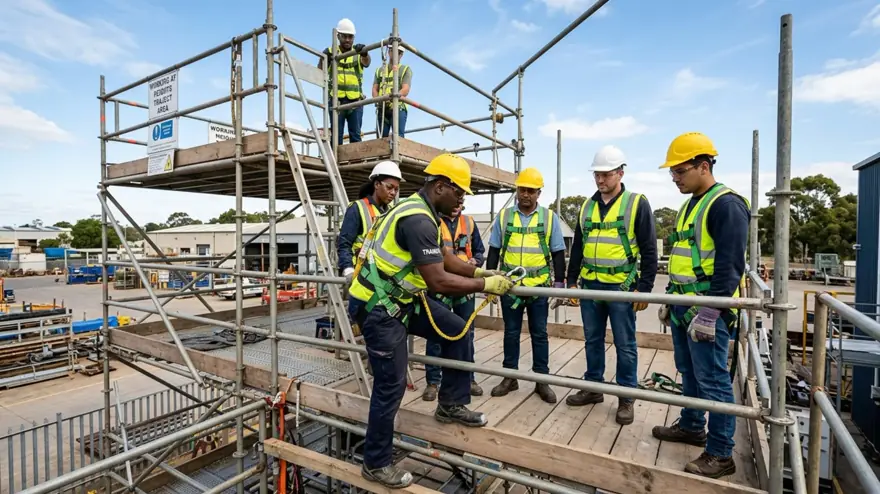

A fall costs more than the training ever would.
Working at height is one of the most dangerous things your team does, and the law is strict about it. The four problems below are the ones employers bring us most.

A worker passes the fitness medical and goes up anyway, but a medical is not training. The law needs both: fit to work at height, and trained to do it safely. We close the gap so the worker is properly covered.

Competency is not once and forever; workers need refresher training to stay current. We track who is due and bring the refresher to you before the certificate runs out, not after an inspector asks.

A half-full class costs the same to run as a full one, so the cost per learner climbs. Fill the class and the cost per head drops, with the same quality outcome. Ask us about volume discounts.

A main contractor or an auditor asks for working-at-heights certificates and the file has gaps. We train, certify and keep the records, so the proof is ready before the question is asked.
Need a crew trained for heights?
Tell us how many workers and where they are based. A sales executive replies the same working day with a proposal and the best class plan for your numbers.

Built for the way a site actually works.
SETA-certified training, delivered nationwide, on-site or at our Midrand centre, with the medical and the training under one partner.
The medical confirms fitness for height; the training confirms competency at height. Care Net does both, so one partner closes the whole legal duty.
SHEQ
Our training is certified by the Health and Welfare SETA and the Construction SETA, and delivered with our MSHEQ partner, so the certificate holds up when a site or an auditor checks it.
SHEQ
We train anywhere in the country, on your site or at our Midrand centre, which has classrooms and real scaffolding to train working at heights properly.
Any site
A class costs much the same to run whether it is half full or full. Fill the seats and the cost per learner drops, with no change to the quality outcome. Ask us about volume discounts.
Procurement
We keep the training and competency records in a secure, POPIA-aware system, retrievable for the periods the Occupational Health and Safety Act and its regulations require.
SHEQ
Medicals, training and records under one roof, with clear pricing agreed up front and volume discounts on full classes. No surprises at month end.
Procurement
A trained worker knows how to inspect a harness, clip to the right anchor and stop an unsafe job. Training is the difference between a near miss and a funeral. Your people go home to their families.
WellbeingWhat your workforce gets out of it.
Training is a legal duty, but a well-run programme also protects the people who do the most dangerous work and the managers who answer for them.
A trained worker inspects the harness, clips to the right anchor and stops an unsafe job. Competence is what turns a fall into a near miss instead of a fatality.
WellbeingWe train on your site or at our centre and plan around your shifts, so the team is certified without emptying the site for a day.
OperationsThe medical confirms a worker is fit for height and the training confirms they are competent at height. Booked together, the worker is fully and legally covered.
SHEQMedical and training records sit together in a secure, POPIA-aware system, so a main contractor or an auditor gets the proof in a search, not a storeroom.
SHEQSETA-certified and issued with our MSHEQ partner, so the working-at-heights certificate stands when a site or an inspector checks it.
Site managersFill a class to capacity and the cost per learner drops, with no change to the quality outcome. Ask us about quality and volume discounts.
ProcurementFit for height. Trained for height.
The occupational medical confirms a worker is medically fit to work at height. The working at heights training confirms they are competent to do it safely. They are two different legal requirements, and a worker needs both. Booked together with Care Net, nobody falls through the gap between fit and trained.
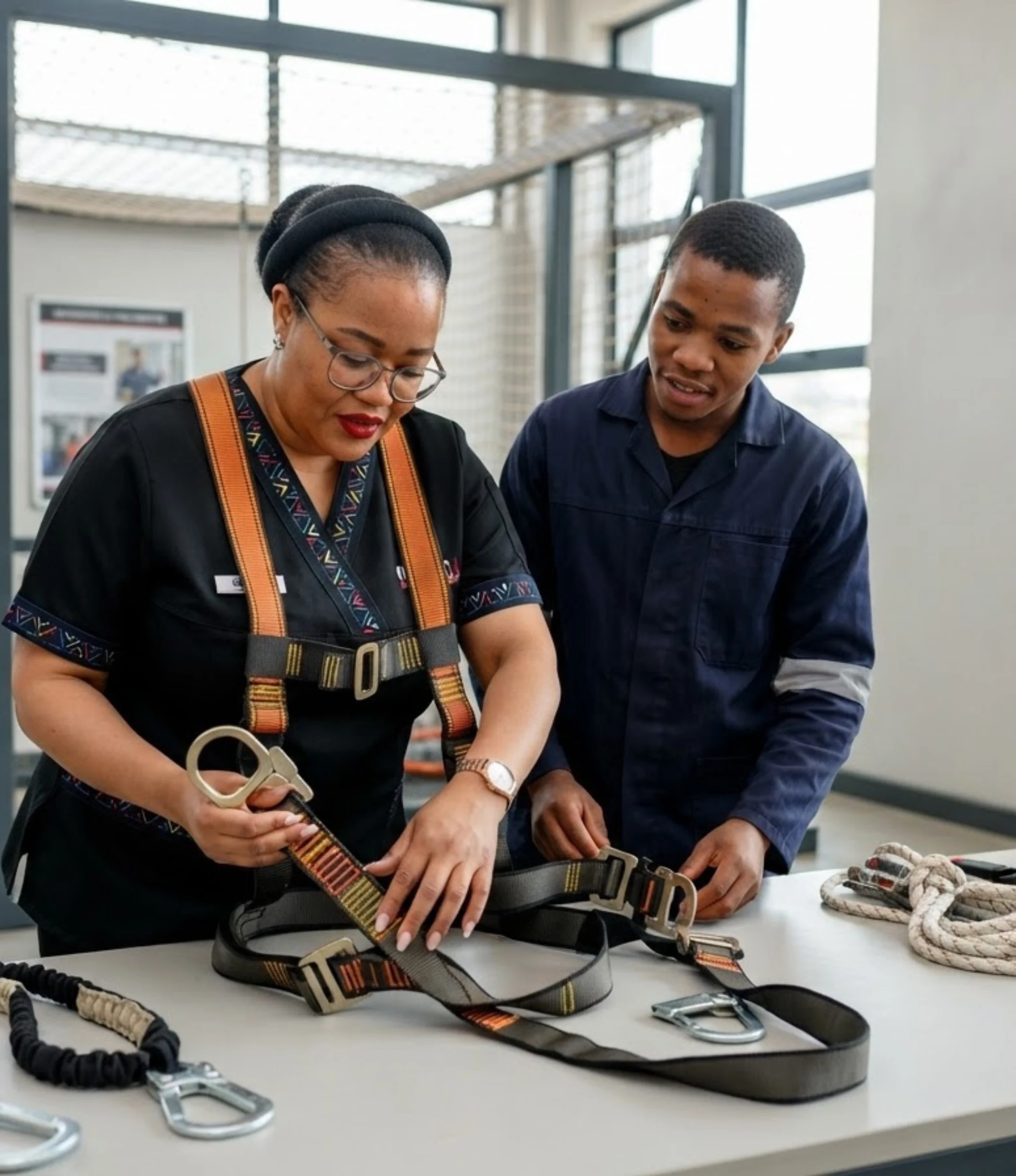
At our Midrand centre we have classrooms and scaffolding to train working at heights properly, hands on the harness and the anchor, not just theory on a screen. We also bring the training to your site, anywhere in the country. The certificate is SETA certified and issued with our MSHEQ partner.
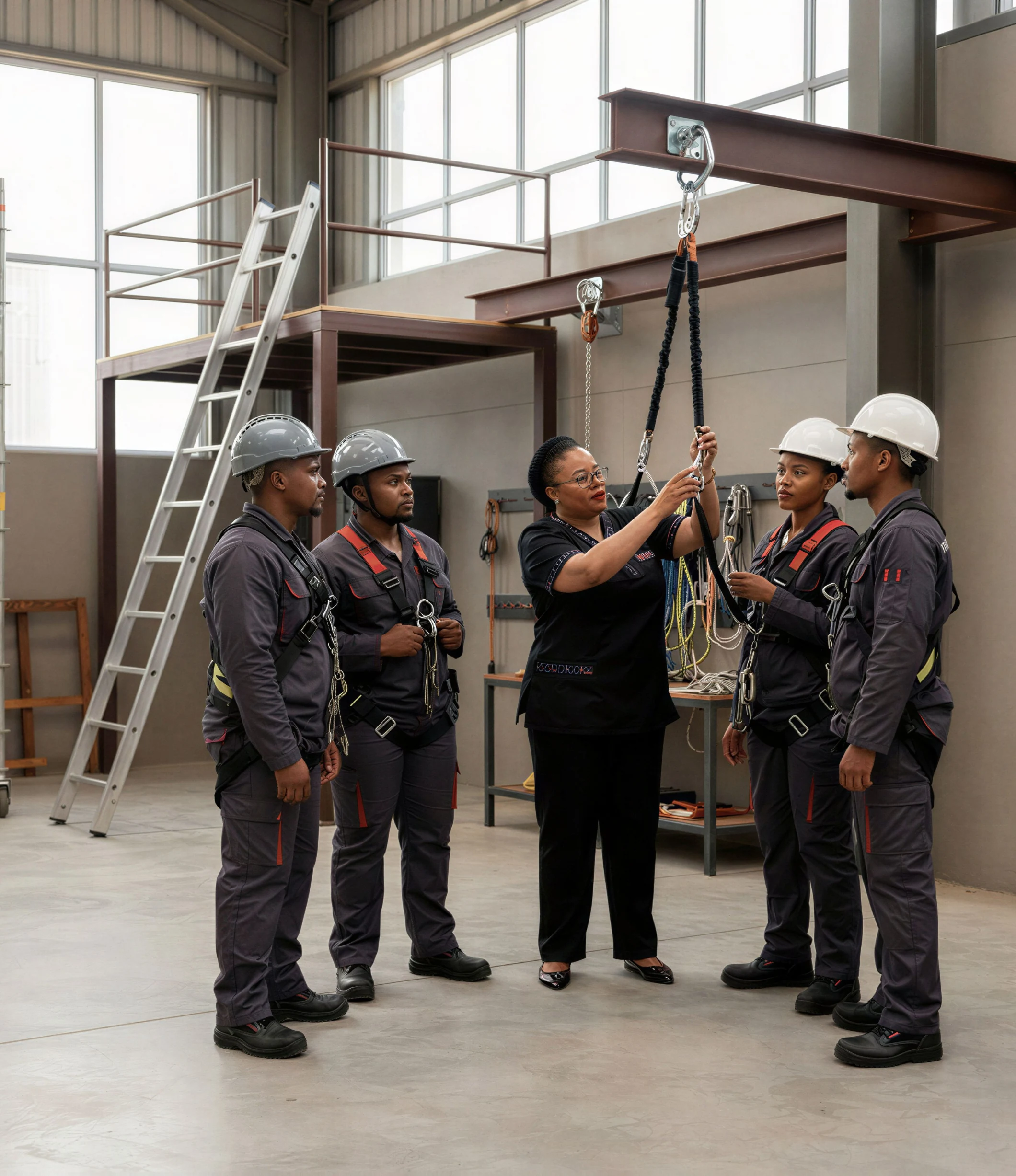
The Working at Heights course, in one day.
A practical, SETA-certified course that takes a worker from fit to competent. Delivered on your site or at our Midrand centre on real scaffolding. The exact outline is confirmed against your site and the work your team does.
The core course for anyone who works at height. It builds the knowledge and the practical skill to work safely, inspect equipment and follow a fall protection plan.
- Working at heights law and the employer's duty
- Hazard awareness and the fall protection plan for the job
- Selecting, inspecting and fitting a fall-arrest harness and lanyard
- Choosing and using the right anchor point
- Practical work on real scaffolding, not theory alone
- When to stop an unsafe job and how to raise it
Certified by the Health and Welfare SETA and the Construction SETA, aligned to unit standard 229994 (working at heights and fall protection). Refresher training keeps the competency current; we confirm the refresher cycle for your team and track who is due.
Anyone who works where a person could fall, in construction, manufacturing, warehousing, telecommunications, utilities and more. New starters before they go up, and current workers due for a refresher.
On your site, anywhere in the country, or at our Midrand centre with classrooms and scaffolding. Small groups so everyone gets hands-on time. Fill the class and the cost per learner drops.
A competent, certified worker and a record we keep for you, ready for a main contractor or an auditor. Booked with the medical, the worker is both fit and trained.
Often booked alongside it
Working at height is rarely a single course. These related, SETA-certified courses round out a site's height-safety competency. Each is confirmed with you for content and duration.
For the competent person who must prepare and sign off the site fall protection plan that the law requires before work at height begins.
For workers who build and dismantle scaffolding safely, so the platform your team works from is sound before anyone steps onto it.
For the person who inspects and tags scaffolding as safe to use, a control that sits behind every safe day at height.
For the supervisor who oversees scaffold work on site and holds the competence to manage the team and the controls.
This page focuses on working at heights. Care Net also runs SETA-certified courses in SHE Representative, First Aid, Fire Marshall, Confined Space Entry, Basic Rigging and more. Ask a sales executive for the full programme and a plan for your site.
On your site, or at our centre.
Working at heights training works best where the work happens. We bring it to you anywhere in the country, or you send your team to our Midrand centre built for it.
We bring the trainer and the equipment to your site, anywhere in South Africa, and plan around your shifts so the work carries on. Best when you have a group to train in one place.
Our head office has classrooms and real scaffolding to train working at heights hands-on, not just theory. Best for smaller numbers or when you want a fixed training date.
Run the working at heights medical and the training together, so a worker is confirmed fit and trained in one planned window instead of two separate days.
Tell us your team size and the work they do. A sales executive builds a plan that covers new starters and refreshers, and shows where filling a class lowers the cost per learner.
The law is clear. Train, or do not send them up.
Working at height is governed by health and safety law that puts the duty squarely on the employer. These are the rules behind the training, clearly explained, with the source one click away.
The Occupational Health and Safety Act requires every employer to provide and maintain a working environment that is safe and without risk to health, in every industry. For work at height that means proper training, competent supervision and safe equipment. Training is how you meet the duty and prove it.
Read the ActRegulation 10 requires a competent person to prepare a written fall protection plan for any work where a person could fall, including a rescue plan, and workers must be trained before they work at height. The fall protection planner must hold SETA-accredited training. We train the workers and the planner.
Read the regulationsBeyond construction sites, the General Safety Regulations cover roof work and work in elevated positions in general industry, which may proceed only when it is safe to do so with the right protective measures. Manufacturing, warehousing and telecoms all fall here. The training applies wherever a person could fall.
Read the regulationsSection 8 of the Act requires plant and equipment to be safe, and fall-arrest equipment must meet the applicable SANS standard and be inspected by a competent person. Our training teaches workers to select, inspect and reject fall-arrest equipment, so the harness on the worker is one that will hold.
Read the ActThe law expects a worker at height to be both medically fit and trained and competent for the task, under competent supervision. The medical answers fitness; the training answers competency. A worker needs both, and Care Net provides both, so neither half is left undone.
Read the ActOur training is certified by the Health and Welfare SETA and the Construction SETA, and delivered with our training partner MSHEQ, whose standards align with ours. Care Net is a member of the wider occupational health and safety profession in South Africa, whose recognised professional body is SAIOSH.
- Health and Welfare SETAcourse certification
- Construction SETAcourse certification
- MSHEQ partnercomprehensive training, value aligned
- SAIOSHSAQA-recognised OHS professional body
Why a full class costs less per learner.
A training day costs much the same to run whether the class is half full or full. So the fuller the class, the lower the cost for each learner. Put in your own figures to see the difference. Then ask us about quality and volume discounts; the quality outcome never changes.
Your estimate
An estimate from your own figures, to show the principle that filling a class lowers the cost per learner. It is not a quote or financial advice. A sales executive confirms the real price and the volume discount for your numbers.
Ask about volume discountsKnow exactly what to expect, before the first climb.
Short, clear explainer videos. The first group covers the training and how it works; the second covers the law and staying safe at height.
Straight answers, before you book.
I have done the medical. Do I still need the training?
Yes. They are two different legal requirements. The medical confirms a worker is medically fit to work at height. The training confirms they are competent to do it safely. A worker needs both, and Care Net provides both, so neither half is left undone.
How long is the Working at Heights course?
The core Working on Heights course is one day. It combines the law and hazard awareness with hands-on practical work on real scaffolding, so a worker leaves competent, not just informed.
Do you train on our site, or do we come to you?
Either. We train anywhere in the country on your site, which suits a group, or at our Midrand centre, which has classrooms and scaffolding and suits smaller numbers or a fixed date. We plan around your shifts.
How often is refresher training needed?
Competency is not once and forever; workers need refresher training to stay current. The exact cycle depends on the course and your risk, and we confirm it for your team and track who is due, so a certificate is renewed before it lapses.
Can we lower the cost by training a bigger group?
Yes. A class costs much the same to run whether it is half full or full, so filling the seats lowers the cost per learner with no change to the quality outcome. Ask us about quality and volume discounts for your numbers.
Is the training accredited, and will the certificate hold up?
Our training is certified by the Health and Welfare SETA and the Construction SETA, and delivered with our MSHEQ partner. The certificate holds up when a main contractor or an inspector checks it.
Who needs working at heights training?
Anyone who works where a person could fall, in construction, manufacturing, warehousing, telecommunications, utilities and more. The Construction Regulations also require a trained, appointed competent person to prepare the site fall protection plan, and we train that role too.
Can you do the medical and the training together?
Yes, and it saves a trip. Booked together, a worker is confirmed medically fit and trained and competent in one planned window instead of two separate days. Tell us your numbers and we build the plan.
Need the medical too? We do both.
A worker at height must be medically fit as well as trained. The working at heights medical confirms the fitness, and you can run it alongside the training in one window. See the construction medicals page for the working at heights medical, or ask us to book both together.
